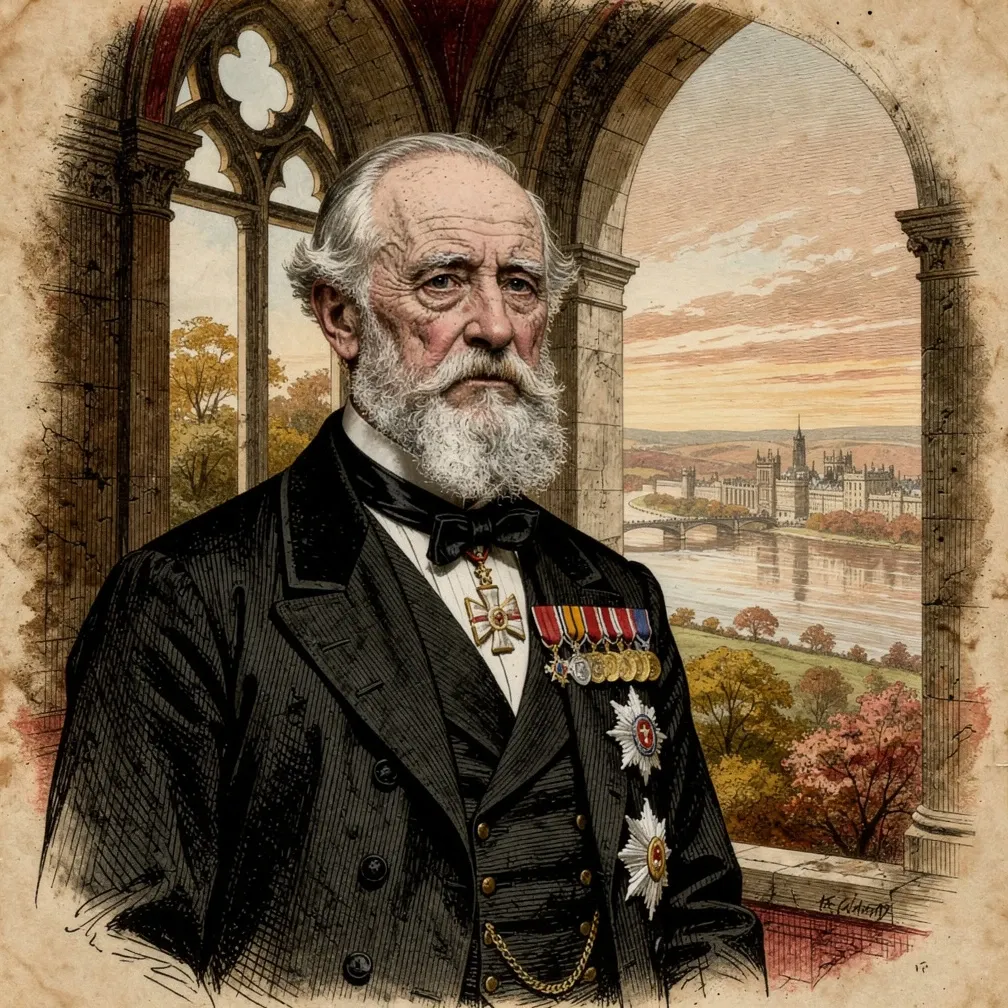
The Prince Who Did Not Die: Albert and the Long Victorian Century
Point of Divergence
Prince Albert, consort to Queen Victoria, does not die in December 1861. In the aftermath of the Great Stink (July–August 1858), Albert — already suffering recurring stomach complaints he and his physicians cannot explain — personally directs an overhaul of Windsor Castle's internal water supply and drainage. Motivated by both the public sanitation crisis and his own characteristic investment in modern infrastructure and science, he commissions works to install filtration and close the castle's drainage loop from the Thames. The works are completed by late 1860 or early 1861. When Albert visits Sandhurst in driving rain on November 22, 1861, and falls ill with a cold in the days following, there is no contaminated water at Windsor to develop into typhoid fever. He recovers within a week. He lives.
It is easy to imagine a version of this story in which Albert's survival is simply a gift. The great reformer lives. The liberal constitutionalist who loved science and believed in progress gets twelve more years to work. Victoria does not collapse into widowhood; Bertie does not waste his best decades under the shadow of a father's disappointment; the German question might find some answer other than Bismarck's. A man escapes the typhoid that killed him, and the century turns out better. It is easy to imagine, and it is almost entirely wrong.
What follows is a record of what Albert's survival cost. He lived long enough to watch Bismarck achieve German unification through three wars and a constitutional settlement that made a mockery of everything Albert had worked for. Long enough to see his daughter Vicky fail at the Prussian court with the exact tools he had spent his life giving her. Long enough to watch the republican movement run unchecked through 1872 and into 1873 — unchecked because there was no Sandringham vigil, no dying prince, no national sympathy surge to deflate it. He died having stripped the monarchy of every emotional asset it would need in the decades ahead: no martyrdom, no grief that humanised the Crown, no memory of a good man taken too soon. In our timeline, Albert's death in 1861 gave Victoria the most powerful political shield a monarch could have. In this one, his survival gave her twelve years of a different kind of education, and left the institution more contested than he found it.
The documents gathered here follow this mechanism — not as an argument against Albert, but as an honest account of how it worked. The dispatches come from within the timeline. The stories come from people who were present. The analysis states what Albert never knew. There is no verdict on the man. There is only the record.
Documents from this timeline
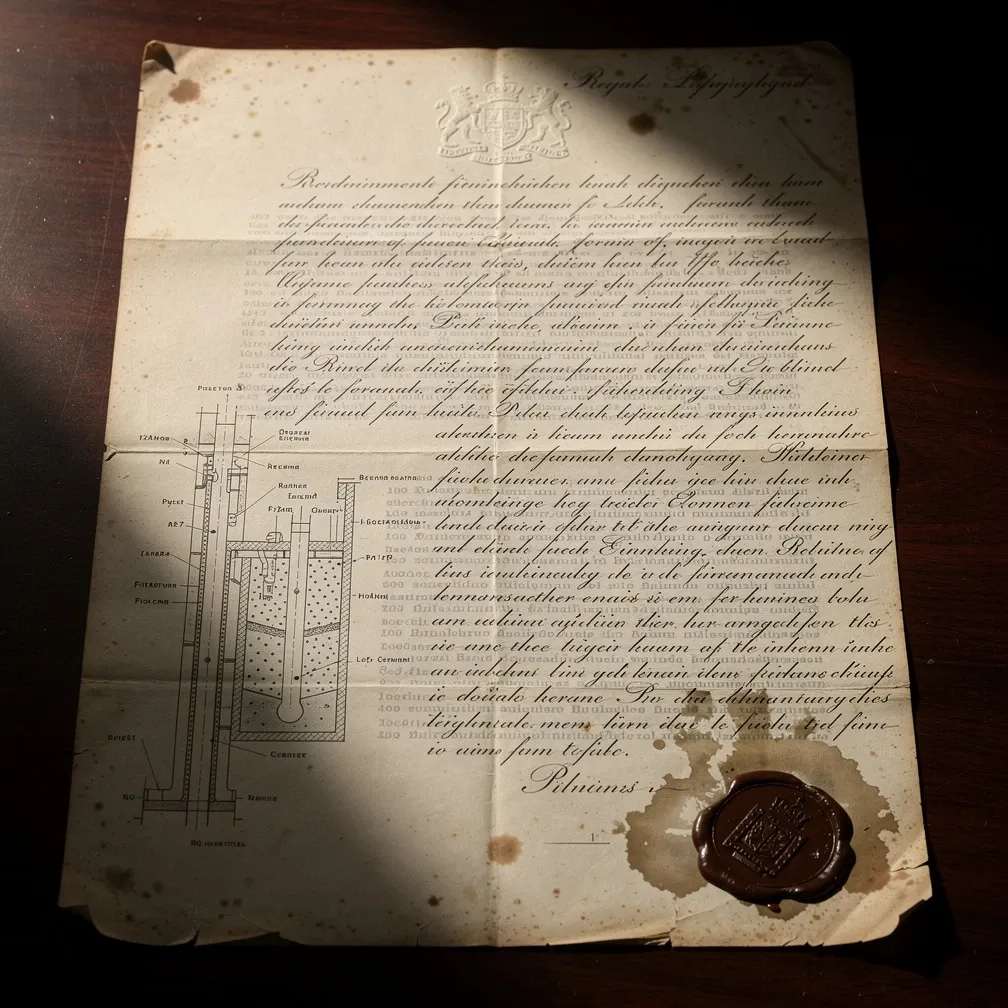
The memorandum that saved a life — though its author never knew it.
August 1858The private reckoning Albert wrote for no one but himself.
October 1861Timeline
| 1858 | The Great Stink — and Albert's responseThe summer of 1858 brings the Great Stink to London — the Thames at low tide producing a smell so severe that Parliament considers relocating. Albert, who has been suffering recurring stomach… |
| 1860 | Windsor drainage works completedThe works — filtration for the water supply, re-routing of the drainage — are completed in late 1860. They are neither dramatic nor celebrated. Albert inspects them, finds them satisfactory, and… |
| 1861 | The Clifden Affair — and its aftermathIn October, Albert learns that Bertie — at military camp at the Curragh in Ireland — conducted a liaison with actress Nellie Clifden, arranged by fellow officers as an amusement. Albert travels to… |
| 1862 | Albert's underlying condition begins to assert itselfAlbert is forty-three years old and describes himself in letters to Vicky as feeling 'constitutionally old.' The stomach complaints that have bothered him for years grow more persistent — cramping… |
| 1863 | Bertie marries Princess Alexandra of DenmarkThe Prince of Wales marries Princess Alexandra at St. George's Chapel, Windsor, in March. The ceremony is considered a triumph. Alexandra is warm, beautiful, and immediately popular; the crowds are… |
| 1864 | Schleswig-Holstein: Albert argues, Palmerston ignoresPrussia and Austria go to war against Denmark over the Duchies of Schleswig and Holstein — a crisis Albert has been dreading for years, one that implicates Vicky's adopted Prussia, the liberal… |
| 1865 | Palmerston dies; political ground shiftsPalmerston dies in October, aged eighty-one, two days before his birthday. For Albert it should be an opportunity — Palmerston was the most obdurate obstacle to any royal influence over foreign… |
| 1866 | The Seven Weeks' War — Albert's horrorPrussia defeats Austria in seven weeks — Königgrätz on July 3, the German Confederation dissolved, Bismarck's mastery of central Europe effectively complete. Albert receives the dispatches at Windsor… |
| 1867 | Albert begins delegating to Bertie — the pragmatic thawAlbert's health now requires regular rest that he refuses to call rest, describing it instead as 'managed reduction of non-essential duties.' The practical consequence is that Bertie begins appearing… |
| Second Reform ActDisraeli's Reform Act passes in August, doubling the electorate and enfranchising much of the urban working class. It is, in broad terms, the kind of incremental reform Albert has spent his life… | |
| 1868 | Gladstone's first ministry; Victoria finds her voiceGladstone's Liberals win the November election and take office in December. Victoria, who has been developing her own political instincts through years of watching Albert navigate the Palace's… |
| 1870 | Franco-Prussian War: Albert watches from WindsorFrance and Prussia go to war in July; by September, Napoleon III is a prisoner and Paris is under siege. Albert follows the campaign from Windsor, receiving dispatches and writing analyses that no… |
| 1871 | The German Empire proclaimed at VersaillesThe German Empire is proclaimed in the Hall of Mirrors at Versailles on January 18 — the symbolism of the location is not lost on anyone. Albert reads the dispatch at Windsor and does not write that… |
| Bertie's typhoid at Sandringham — a strange symmetryNovember at Sandringham is unremarkable. Bertie is in good health. Alexandra organizes shooting parties. The household runs on its customary schedule. There is no typhoid, no vigil, no national… | |
| 1872 | Victoria governs; the republican pressure buildsThe republican movement reaches its parliamentary peak. Charles Dilke moves his motion in the Commons in November; the radical clubs produce pamphlets and hold public meetings; the question of the… |
| 1873 | The death of Prince AlbertAlbert dies on a Thursday in March, aged fifty-four. The official cause is a long-standing abdominal condition; his physicians have been preparing the language for two years. Victoria is at his… |
Key Figures
- Prince Albert
Saxon-born, intellectually rigorous, emotionally repressed, and almost without friends outside his own family. Albert was by the 1850s effectively Victoria's private secretary — reading dispatches…
- Queen Victoria
Victoria was, as the diarist Charles Greville wrote in 1845, 'one person' with Albert: 'He likes and She dislikes business.' She was emotionally intense, obstinate, warmhearted, and dependent on…
- Albert Edward, Prince of Wales
Bertie struggled under his father's impossible expectations from childhood. He could not concentrate, found academic work difficult, and rebelled through social excess — exactly what Albert had tried…
- Otto von Bismarck
Bismarck achieved German unification through three carefully provoked wars — against Denmark (1864), Austria (1866), and France (1870–71) — and a constitutional settlement that preserved Prussian…
- Victoria, Princess Royal ('Vicky')
Albert's eldest daughter, most like him in temperament and intellect, married Crown Prince Frederick of Prussia in 1858. Albert placed enormous political and personal hope in this match — Vicky at…
- William Ewart Gladstone
Gladstone was a man of enormous moral seriousness, deep religious conviction, and exhausting verbosity. Victoria famously found him impossible — he addressed her, she said, as if she were a public…
- Henry John Temple, 3rd Viscount Palmerston
Palmerston was almost impossible for the Palace to influence. He ran British foreign policy with confident independence, treated royal memoranda politely and ignored them, and had been a political…
- John Brown
In OTL, John Brown became Victoria's closest companion after Albert's death in 1861 — a relationship so intimate it generated years of scandal and the nickname 'Mrs. Brown.' He served as an emotional…
- Princess Alexandra of Denmark
Alexandra was popular, beautiful, and warm where Bertie was reckless. Her marriage to Bertie in 1863 was genuinely affectionate, if not faithful on his part. In OTL, she navigated court life as the…