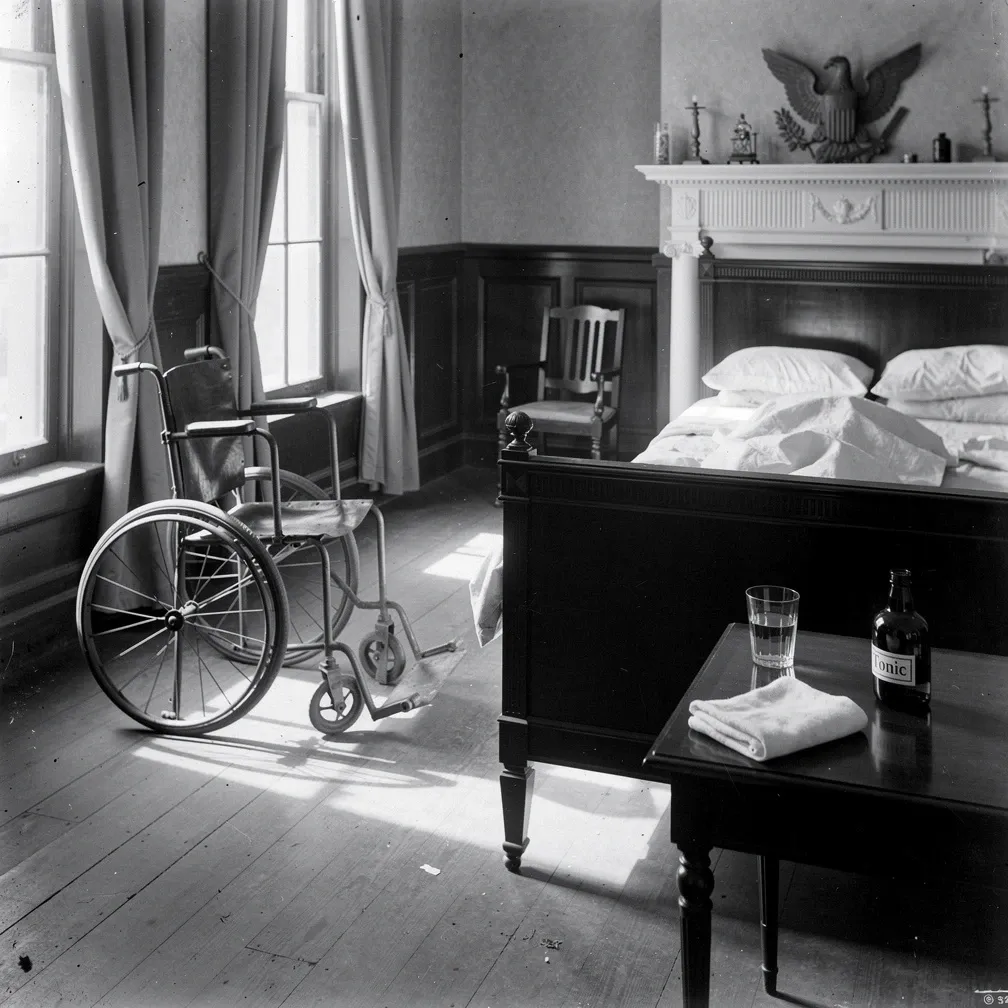
What Fall Saw
Point of Divergence
Senator Albert Fall's staged health assessment of Woodrow Wilson — designed to expose the President's incapacity — goes further than anyone anticipated. Wilson suffers a visible neurological episode during the visit. Fall witnesses it directly. The cover-up, maintained since Wilson's October stroke, is now in the hands of a political enemy. Dr. Cary Grayson goes to Edith Wilson with an ultimatum: the truth is coming out, and only they can choose how. Wilson resigns. Vice President Thomas Marshall — a man who spent years insisting he never wanted the presidency — becomes the 29th President of the United States.
Documents from this timeline
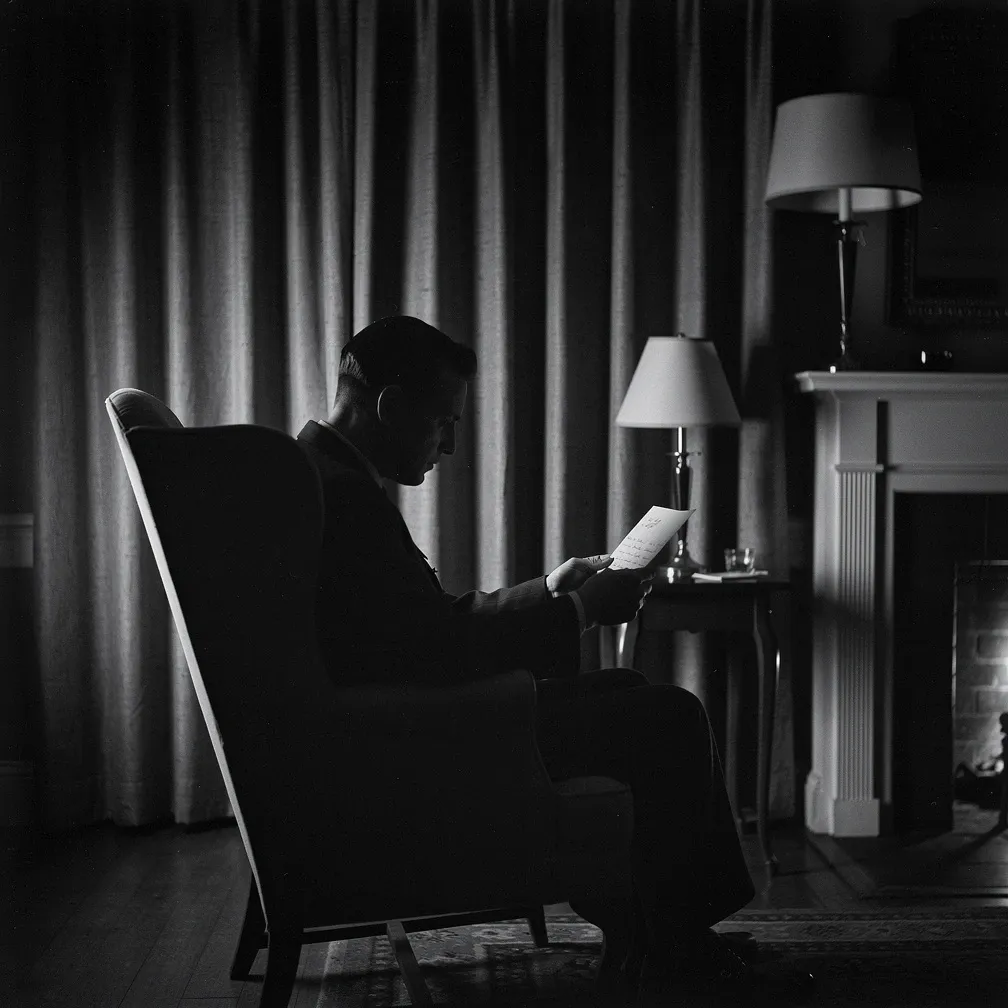
Senator Albert Fall's private letter to Henry Cabot Lodge, two days after his White House visit. Careful. Coded. The letter that set the backchannel in motion. December 7, 1919.
December 1919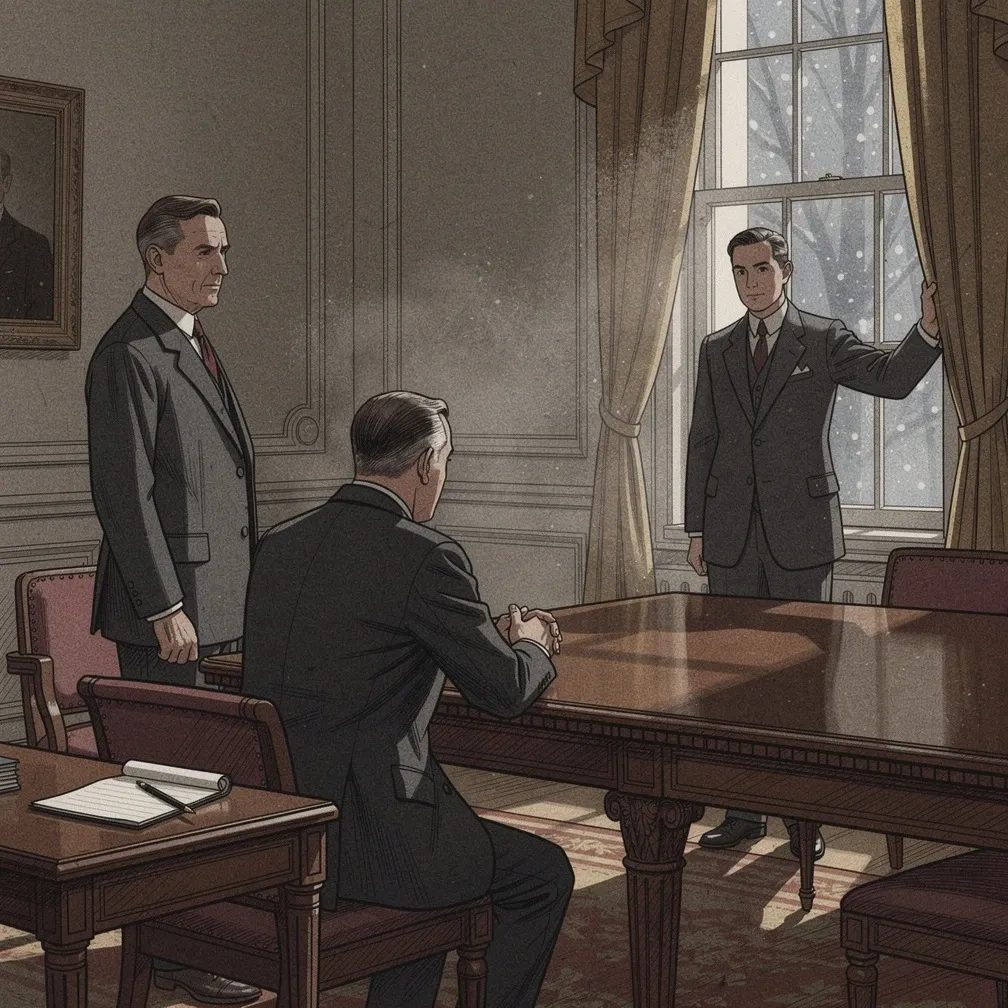
December 12, 1919. The Vice President arrives for his first full briefing on the state of the administration. Private notes, kept by a secretary present in the room.
December 1919
The private journal of Dr. Cary Grayson, Woodrow Wilson's personal physician, covering the week that ended a presidency. December 5–12, 1919.
March 2026Timeline
| 1919 | Fall's Visit — The EpisodeSenator Albert Fall's staged health inquiry at the White House produces more than he anticipated. Wilson suffers a visible neurological episode during the meeting. Fall does not go to the press — he… |
| Grayson's CalculationDr. Cary Grayson, understanding the cover-up is now days from collapse, approaches Edith Wilson with a stark choice: a controlled resignation preserves Wilson's dignity and historical standing; a… | |
| Marshall Takes the OathThomas R. Marshall, 65, is sworn in as the 29th President of the United States in a brief private ceremony. He does not give a speech. In the car to the White House, he asks Secretary of State Robert… | |
| Inventory of the SilenceMarshall and his staff spend ten days quietly auditing the state of the executive branch — what was actually decided, what was managed by Edith and Grayson, what was left unaddressed. Key… | |
| 1920 | A Quiet Approach to LodgeMarshall dispatches an intermediary to Senator Henry Cabot Lodge with a message: he is willing to discuss the Treaty — not Wilson's Treaty, but a Treaty with reservations, if Lodge's reservations are… |
| The Lodge-Marshall CompromiseAfter six weeks of private negotiation, Marshall and Lodge agree on fourteen reservations — fewer and less punishing than Lodge's original list. They assert Congressional authority over committing… | |
| Senate Ratifies the TreatyThe Senate votes 56–32 to ratify the Treaty of Versailles with the Lodge reservations. The United States joins the League of Nations. Marshall signs the instrument of ratification in a modest… | |
| The Convention Marshall Did Not WantThe Democratic National Convention in San Francisco nominates Thomas Marshall on the fourth ballot, over his own stated reluctance. The party, calculating that an incumbent is their strongest… | |
| The Nineteenth AmendmentThe 19th Amendment is ratified, guaranteeing women the right to vote — the ratification process was already in motion and Marshall's presidency does not change the outcome. Marshall signs the… | |
| Harding Wins — But Not Like ThisWarren G. Harding defeats Thomas Marshall 54% to 43%. It is a decisive Republican victory, but a different one than history might have produced: League ratification removed the most potent Democratic… | |
| 1921 | A Clean HandoffMarshall delivers the shortest inaugural address since Lincoln's second. He congratulates Harding, notes that the country is in better shape than he found it, and returns to Indianapolis. He gives no… |
| Harding and the League He InheritedThe Harding administration finds itself constrained by League membership in ways it did not anticipate. 'Return to normalcy' cannot mean withdrawal from an institution the Senate just ratified… | |
| 1923 | The Ruhr Crisis — Managed, Not CatastrophicFrance and Belgium occupy the Ruhr after Germany defaults on reparations. In OTL the crisis produced catastrophic hyperinflation and near-collapse of the Weimar Republic. In this timeline, US… |
| Harding Dies — Coolidge Inherits the ProblemWarren Harding dies in San Francisco, as in our timeline. Calvin Coolidge becomes president. Where Harding was ambivalent about League membership, Coolidge is actively hostile — but withdrawal… | |
| 1924 | Wilson Dies on S StreetWoodrow Wilson dies on February 3, 1924, at his home on S Street — as in our timeline, but now as a former president rather than a man who outlasted his own incapacity in office. Edith controls the… |
| 1928 | The Soviet Union Joins the LeagueThe Soviet Union, watching a League that includes the United States as an active enforcement body rather than a talking shop, moves toward membership. Stalin calculates that isolation is more… |
| 1929 | The Great Depression — Coordinated but Not ContainedThe Wall Street Crash and the global depression that follows hit every major economy. The League provides a coordination framework OTL lacked — tariff wars are somewhat contained, the worst currency… |
| 1931 | Manchuria — Japan Backs DownThe Japanese Kwantung Army seizes Manchuria in September 1931, presenting the League its first major enforcement test. The United States moves within League channels to organize real economic… |
| 1933 | Hitler — Narrowed MandateAdolf Hitler is appointed Chancellor on January 30, 1933 — as in our timeline. The Nazi movement's rise was checked but not stopped: the 1923 crisis, though less catastrophic, still generated… |
| 1935 | Abyssinia — Mussolini RetreatsItaly invades Ethiopia in October 1935. The League imposes sanctions. In OTL the oil embargo was excluded to avoid antagonizing Mussolini — American non-membership made the exclusion easy. In this… |
| 1936 | The Rhineland — Credible ResistanceGermany remilitarizes the Rhineland in March 1936. But the League it faces has backed Japan down and backed Mussolini down. France, Britain, and the US coordinate through League channels. When… |
Key Figures
- Thomas R. Marshall — 29th President of the United States (December 1919–1921)
Indiana Democrat; two-term VP under Wilson; self-deprecating, modest, genuinely reluctant. Believed deeply that the vice presidency was not his to expand and the presidency was not his to take…
- Edith Bolling Wilson — Negotiates the terms of Wilson's resignation; manages his legacy afterward
Intensely protective of Wilson and of her own role. Controlled all access to the President during his incapacity. When Grayson presents her with the choice, she makes the calculation a politician…
- Dr. Cary T. Grayson — The man who ends the cover-up
Grayson had maintained the cover-up since Wilson's October 1919 stroke out of loyalty and, arguably, professional overreach. When Fall's visit changes the calculus, Grayson is the one who does the…
- Senator Albert Fall — Unwitting catalyst of Marshall's presidency
Fall visited Wilson intending to expose his incapacity and use it as political leverage against the League. He got what he came for and more. His move to Lodge rather than to the press is…
- Senator Henry Cabot Lodge — Negotiates the Lodge-Marshall compromise; becomes the unlikely architect of US League membership
Lodge's opposition to Wilson's League was partly genuine constitutional concern (Congressional war powers, Monroe Doctrine) and partly personal animus toward Wilson. With Wilson gone, the personal…
- Lois Marshall — Closest advisor during Marshall's presidency
Practical, grounded, had spent years campaigning quietly for suffrage. Where Thomas was self-deprecating about his own abilities, Lois was clear-eyed about what needed doing. Her steadiness during…
- Robert Lansing — Notifies Marshall of Wilson's resignation; bridges the transition
Lansing had his own strained relationship with Wilson — Wilson eventually forced him out in February 1920 in OTL for having convened Cabinet meetings during Wilson's incapacity. In this timeline…
- Warren G. Harding — 29th President (1921–1923); inherits a League he opposed
'Return to normalcy' was his campaign, but normalcy now includes US League membership. Harding is not ideologically equipped to navigate this. His instinct is to minimize engagement without…