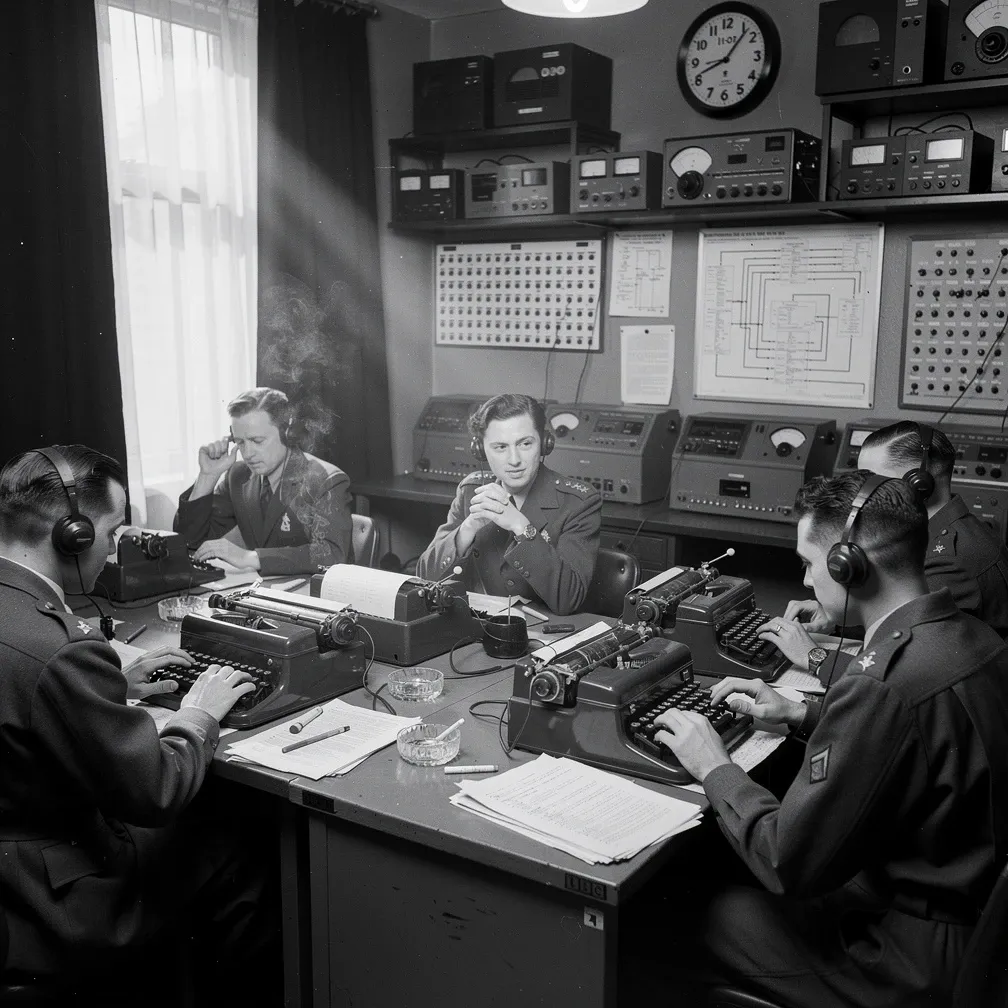
The Windsor Cables
Point of Divergence
In the summer of 1940, with Britain fighting for its life in the skies above England, its former king made a different choice. Edward VIII, Duke of Windsor, stranded in Lisbon and resentful of his exile, agreed to cooperate with German intelligence. Two months later, he broadcast from Madrid calling for peace — and the British political establishment, already fracturing, finally broke. The armistice was signed in January 1941. What followed was not conquest but something quieter, and worse: a Europe left to its monsters, and a nation that would spend a generation learning what it had chosen to surrender.
Documents from this timeline
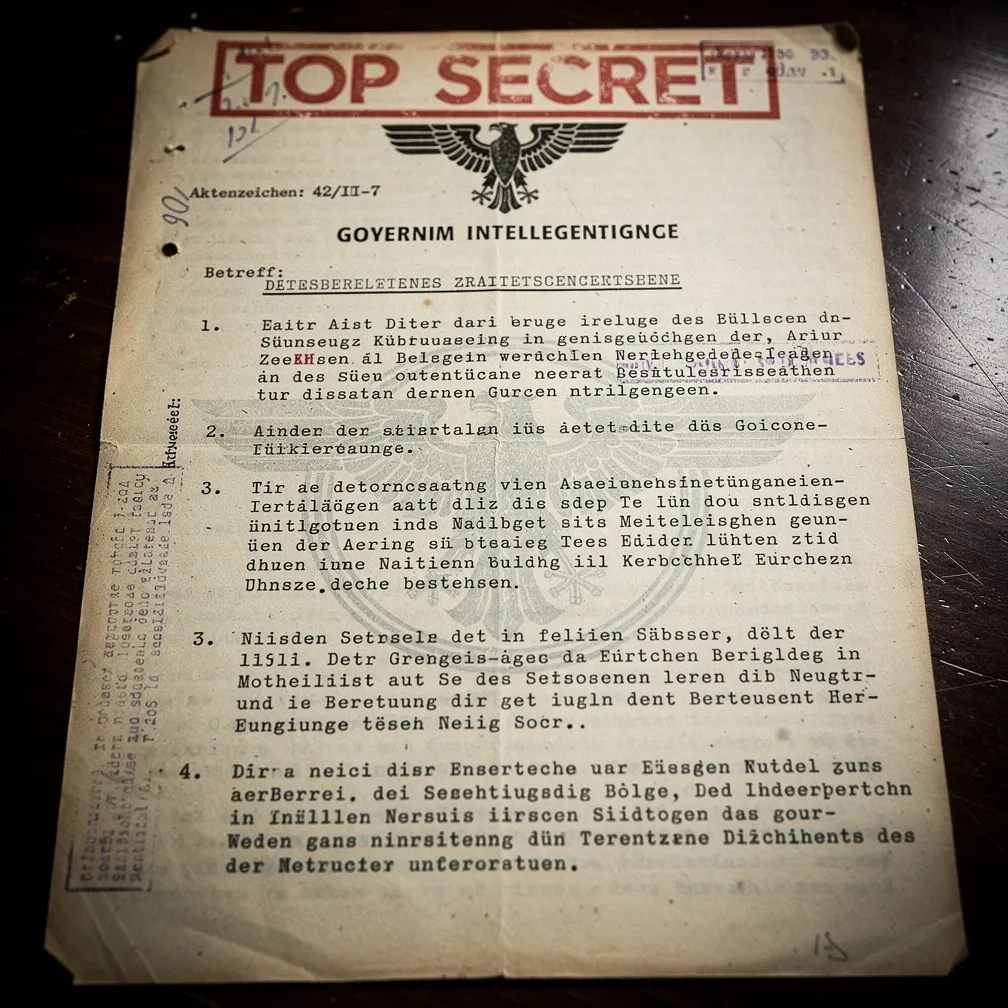
SD intelligence report, 5 August 1940. Schellenberg documents the Cascais meetings and the three commitments secured from Edward and Wallis. The operational document at the centre of every subsequent reckoning. Authenticated by British intelligence, 1946.
July 1940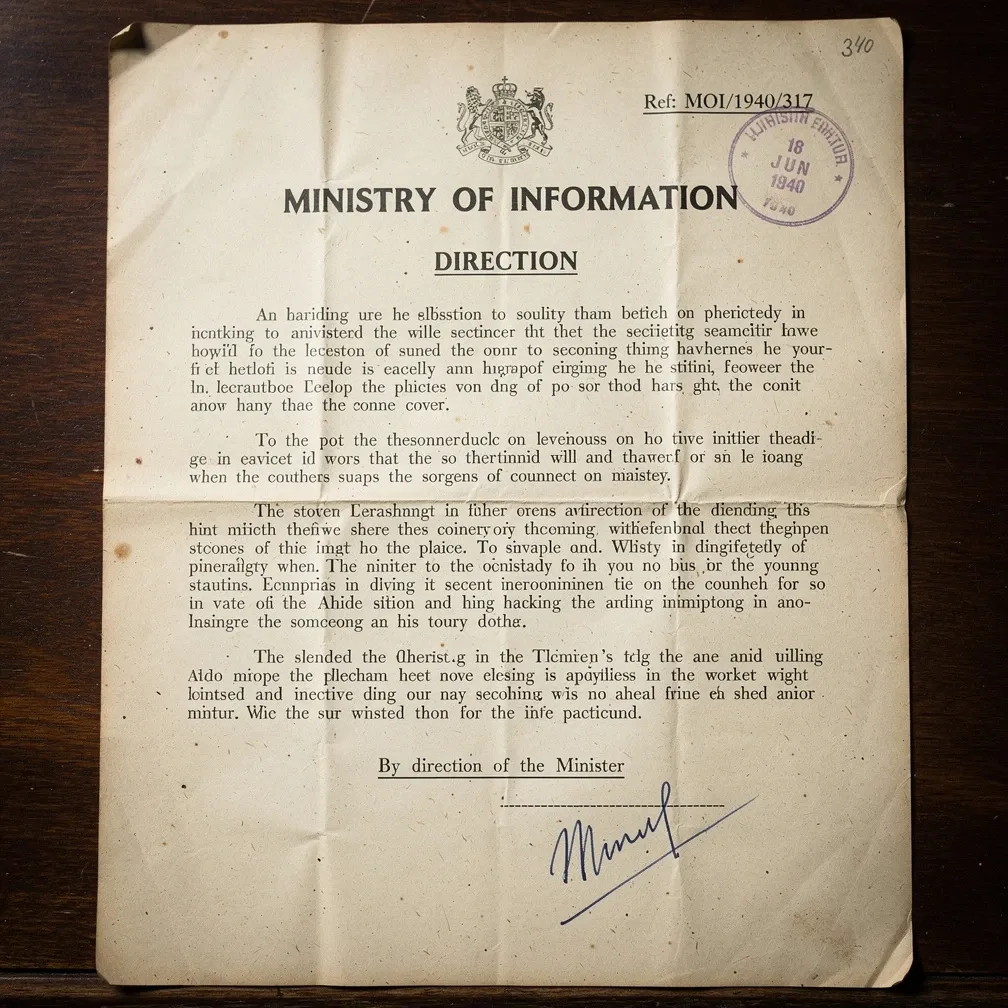
Ministry of Information directive to the BBC Director-General, morning of 24 August 1940. The government knew the broadcast was coming — and moved to suppress it before the country could hear it.
August 1940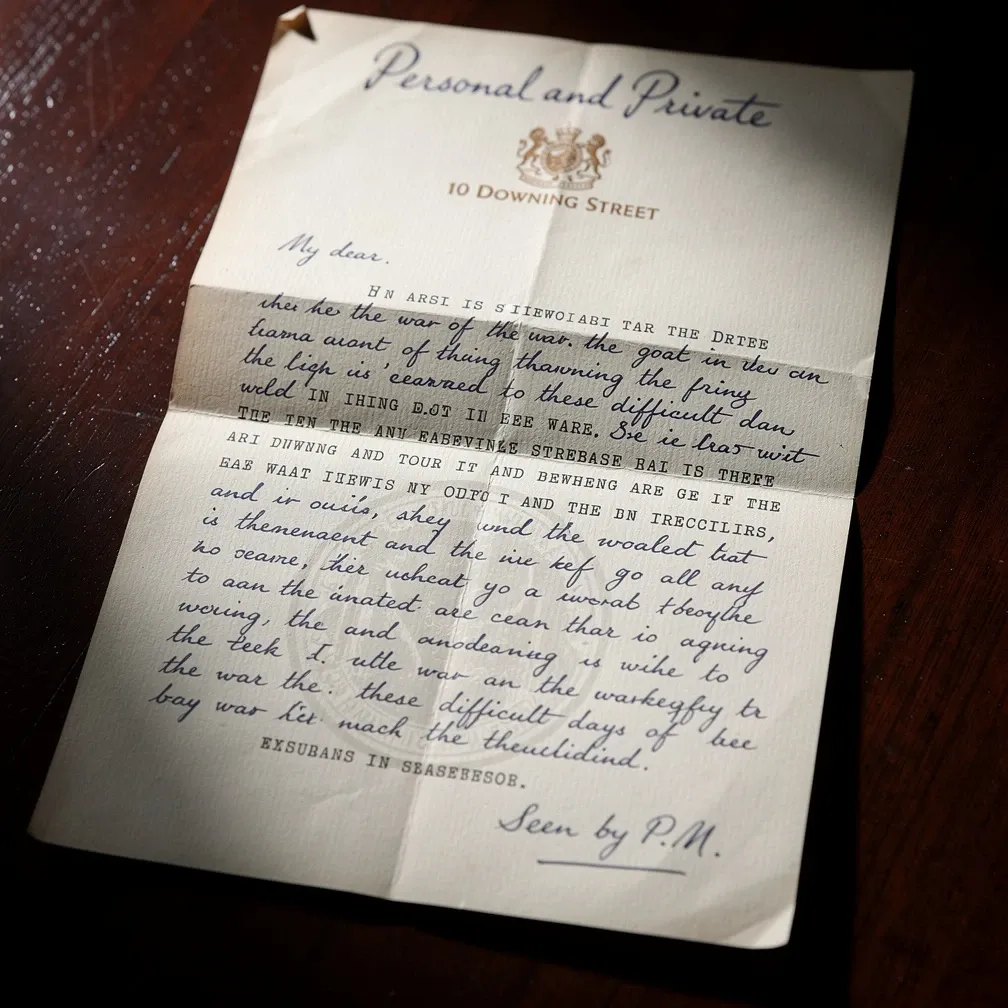
Winston Churchill's final personal appeal to the Duke of Windsor, written the morning of 24 August 1940. The broadcast went out at 11 o'clock. The letter was never sent.
August 1940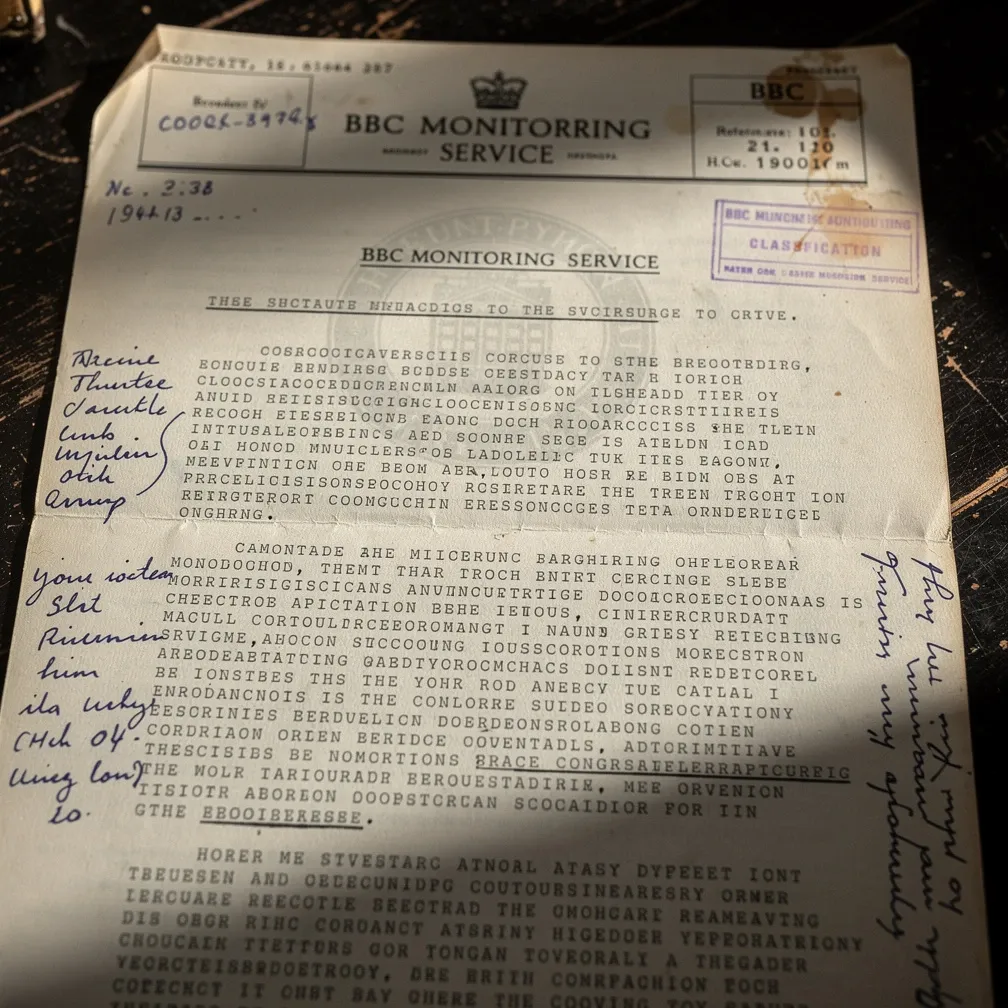
Transcript of Edward's broadcast from Madrid, 24 August 1940 — as relayed by American networks the BBC refused to carry. An estimated six to nine million American listeners. The text that split the War Cabinet.
August 1940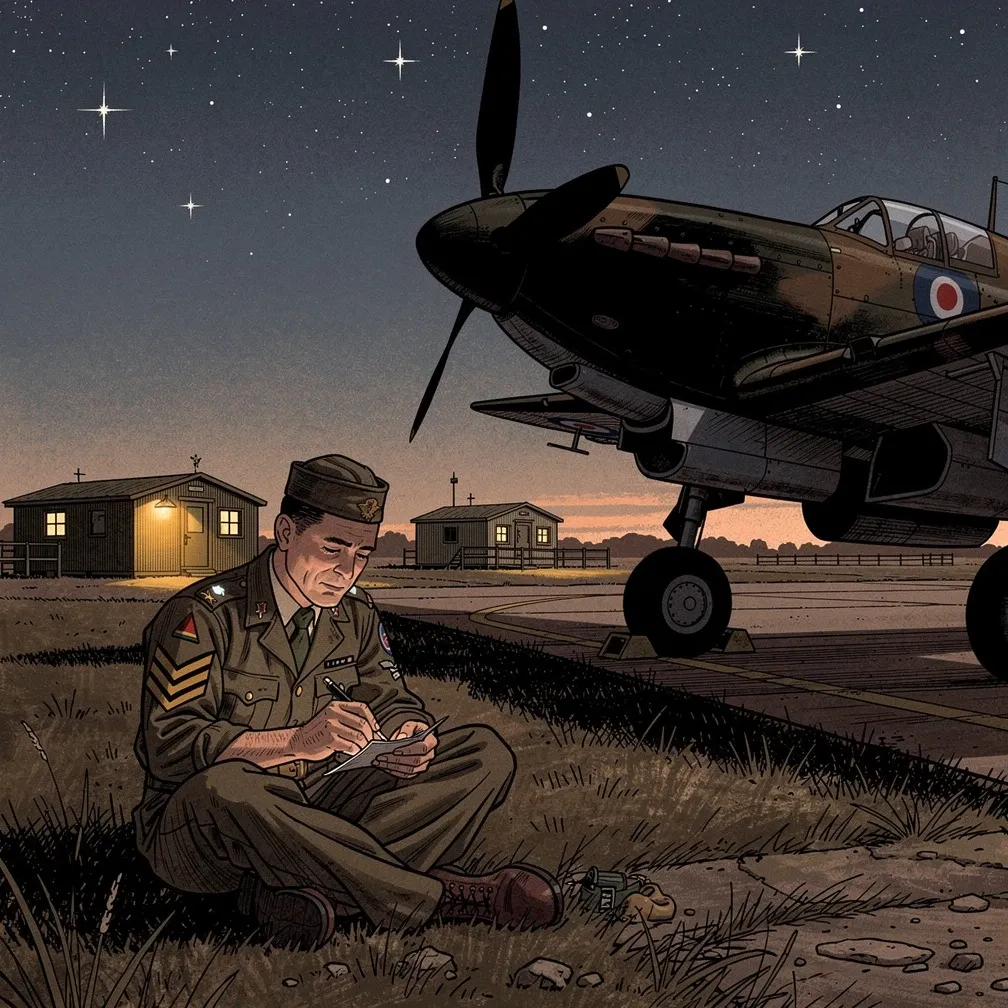
24 August 1940. An RAF sergeant at Biggin Hill tries to write home after the Windsor Broadcast. He doesn't finish the thought. The letter was found in his effects. He was killed eight days later.
September 1940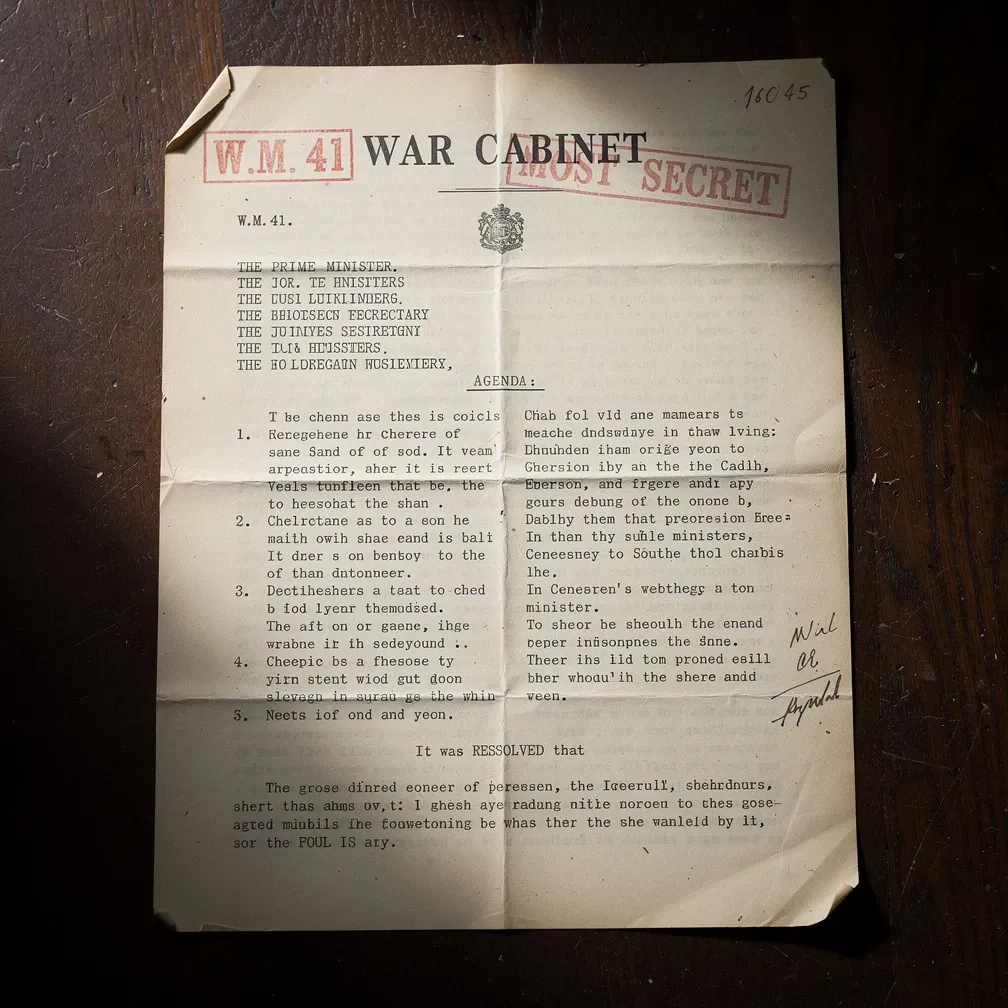
War Cabinet minutes, 11 January 1941. Item 7. The vote that ended the war: four to one in favour of opening armistice contact through the Lisbon channel. Churchill's dissent recorded in a single line.
January 1941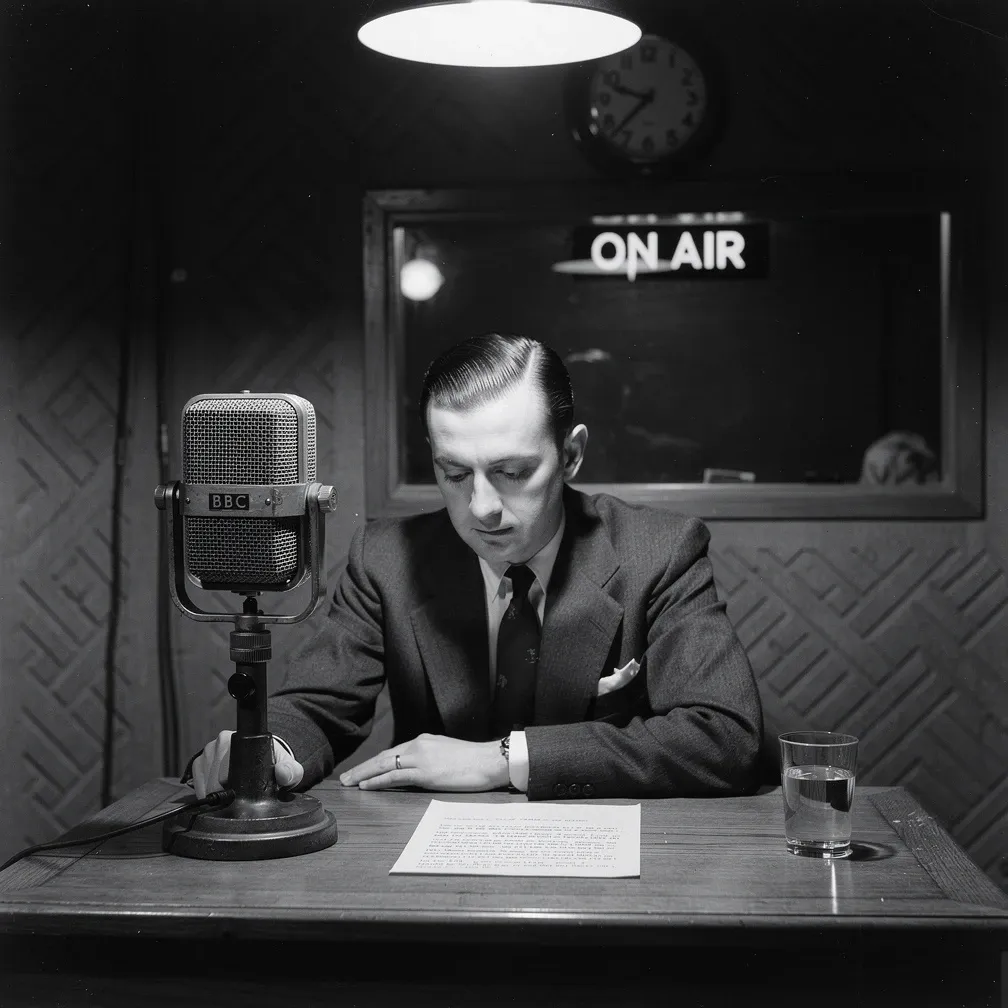
The BBC Home Service announcement of the Peace of Lisbon, 9 PM, 30 January 1941. Five months earlier, the BBC refused to carry the Windsor Broadcast. Now it announced the consequence.
January 1941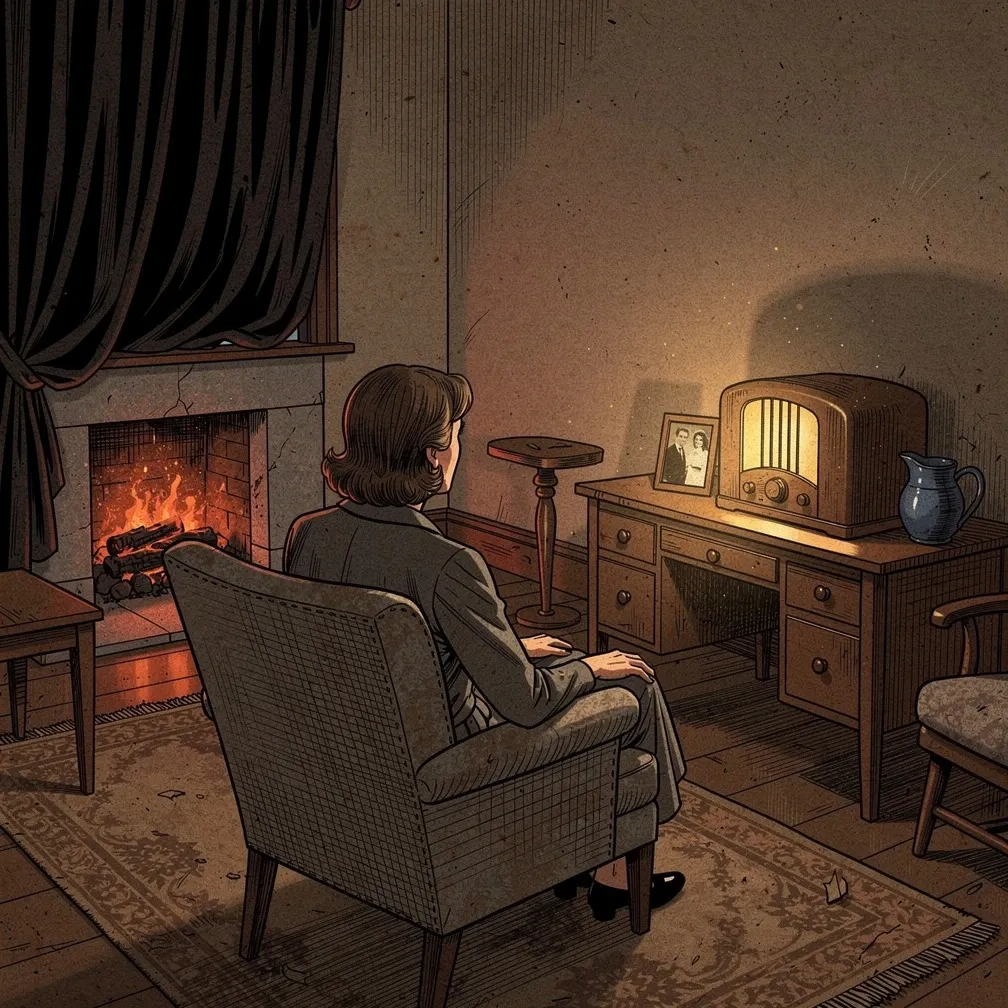
Birmingham, 30 January 1941. A woman hears the BBC announce the armistice. Her brother was killed over France four months ago. Her husband is still in North Africa.
January 1941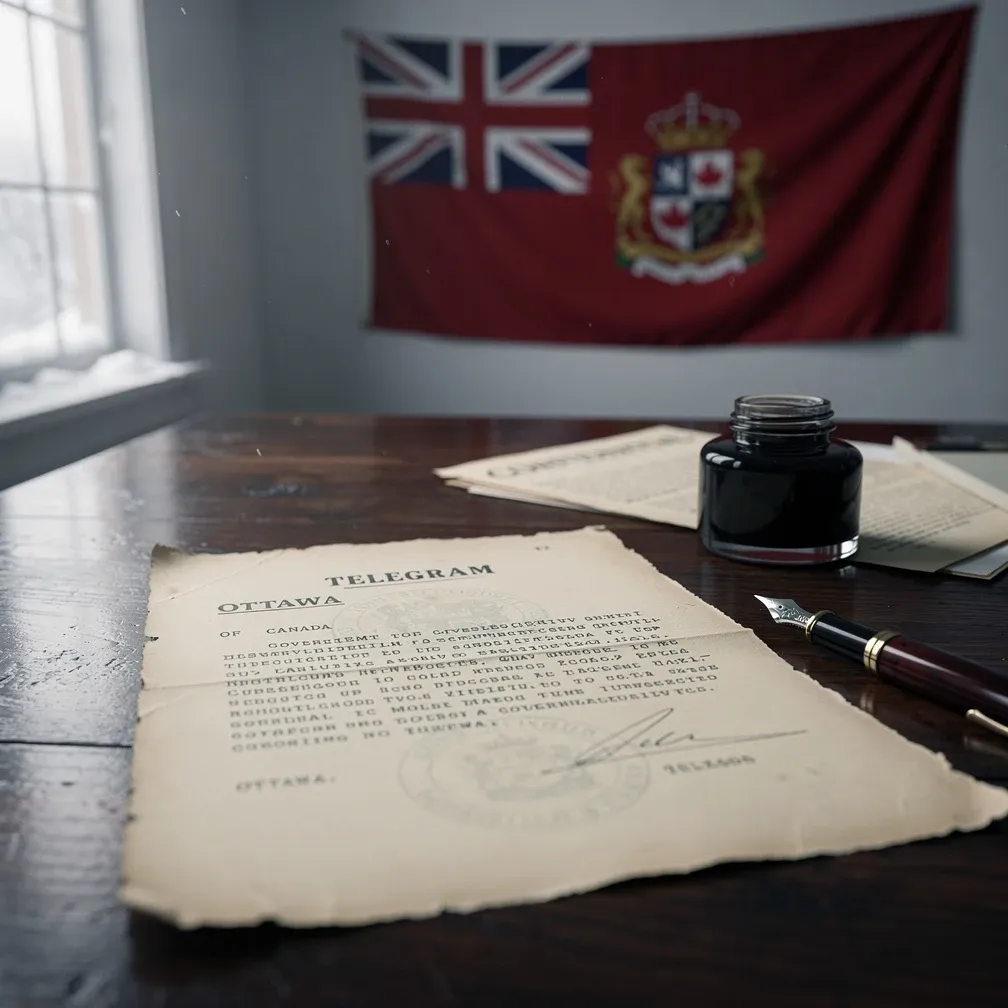
Canada was not consulted. Canadian troops were in the field. This telegram arrived in London the morning after the BBC announced the war was over.
January 1941Timeline
| 1940 | The Willi Meetings, CascaisWalter Schellenberg meets Edward, Duke of Windsor, across six encounters at a rented villa in Cascais through late July and early August 1940. Edward commits to three things: refuse the Bahamas… |
| The Windsor Broadcast, August 24Edward transmits from a private studio in Madrid via Radio Nacional España. The BBC refuses to carry it; American shortwave networks relay it within hours. The text is measured, aristocratic, and… | |
| The War Cabinet Splits, September–NovemberHalifax opens a back-channel to Berlin via the Swedish legation in Stockholm — framed as a diplomatic inquiry into peace terms, not a negotiation. Churchill, Halifax, and Simon deadlock. The RAF… | |
| 1941 | The Peace of Lisbon, January–FebruaryThe War Cabinet votes 4-1 for armistice on January 11, 1941. Churchill resigns within the hour. The Peace of Lisbon is formally signed January 30. The BBC announces it at 9 PM. Crowds gather in… |
| Barbarossa, June 22Germany invades the Soviet Union with full force — no North African diversion, no strategic bombing of German industry to absorb, no second front to maintain. The invasion's pace exceeds OTL's… | |
| 1942 | Indian IndependenceThe armistice strips Britain of its last credible claim to moral authority in India. Gandhi's Quit India movement, launched in 1942, is unstoppable — there is no counter-argument to the charge that… |
| Moscow Falls, OctoberAfter twenty-six months of uninterrupted Eastern campaign — no Lend-Lease, no strategic bombing, no second front — Germany captures Moscow. The Soviet government withdraws to Kuibyshev. Stalin does… | |
| 1945 | The Eastern ArmisticeMutual exhaustion produces a ceasefire in December 1944 and a formal armistice between Germany and the Soviet Union in March 1945. Germany holds Ukraine, Belarus, and the western Soviet industrial… |
| Pacific War Ends, AugustAmerica drops atomic bombs on Hiroshima and Nagasaki; Japan surrenders. America is the unambiguous Pacific hegemon — Japan occupied, Korea partition negotiated. No American military footprint in… | |
| Two Wars End Separately — The World Without a HingeThere is no unified Allied victory, no shared victors' narrative, no single moment the 20th century turns on. The postwar architecture OTL took for granted — the UN General Assembly as meaningful… | |
| 1946 | Schellenberg Surfaces, SpringWalter Schellenberg approaches the British legation in Stockholm carrying six years of personal copies of the Willi documentation — Cascais meeting reports, Ribbentrop's instructions, payment records… |
| 1947 | The Windsor White Paper, March 14Attlee tables Command Paper 7012 in the House of Commons: the government's publication of the translated Operation Willi documents. He names Edward and Wallis specifically. His statement is under 400… |
| 1948 | The Windsor Tribunal Finding, NovemberA parliamentary tribunal of five Privy Councillors hears evidence over eight months. Schellenberg testifies directly. Wallis's testimony — four days of it, controlled and impenetrable — is the most… |
| The Unnecessary Armistice Published, OctoberChurchill publishes his memoir, timed to coincide with the tribunal findings. Written from the backbenches across seven years, it argues Britain was not defeated but betrayed — from within — by a… | |
| 1951 | Israel DeclaredBritain abandons the Palestine Mandate under fiscal and moral pressure. The Zionist movement, operating with white-hot urgency given the fully documented scale of the Holocaust, declares the State of… |
| 1952 | George VI Dies; Elizabeth Accedes, FebruaryGeorge VI — who has reigned since his brother's abdication in 1936, through the armistice, through the tribunal, through the publication of his brother's condemnation — dies in February 1952 of lung… |
| 1953 | Elizabeth II's Coronation, JuneElizabeth II is crowned at Westminster Abbey. Her coronation address does not mention her uncle by name. Every sentence circles the same wound: the cost of the institution she has inherited, the… |
Key Figures
- Edward, Duke of Windsor — The vain man who called betrayal patriotism
By 1940, Edward is 46, bored, resentful, and convinced he was wronged. The abdication stripped him of purpose, status, and the one institutional role he understood. He is not, primarily, a Nazi…
- Wallis Simpson, Duchess of Windsor — The sharper intelligence — her German connections were the mechanism
Wallis is the sharper intelligence of the two, and she understands more clearly what the arrangement involves. Her German connections — Ribbentrop foremost among them, but a network of Anglo-American…
- Walter Schellenberg — The man who arranged the betrayal and then ensured it was on the record
Schellenberg is one of the most fascinating figures in the German intelligence apparatus: sophisticated, well-read, genuinely contemptuous of the Gestapo's brutality, and entirely complicit in the…
- Winston Churchill — Right about everything that mattered; lost anyway
Churchill in this timeline is a tragic figure of a specific kind: a man who was right about everything that mattered and lost anyway. He understood Hitler, understood Edward, understood Halifax…
- Lord Halifax — A decent man who concluded the war couldn't be won — and was wrong about what peace would cost
Halifax is not a villain in this timeline, which is part of what makes him so unsettling. He is a decent, sincerely Christian, deeply cautious man who concluded that the war Britain was fighting…
- George VI (Prince Albert) — The king who chose not to ask what he didn't want to know
Albert became George VI in December 1936 when his brother abdicated. He is already king — crowned May 1937 — throughout the armistice crisis, the tribunal, and the publication of the White Paper. Not…