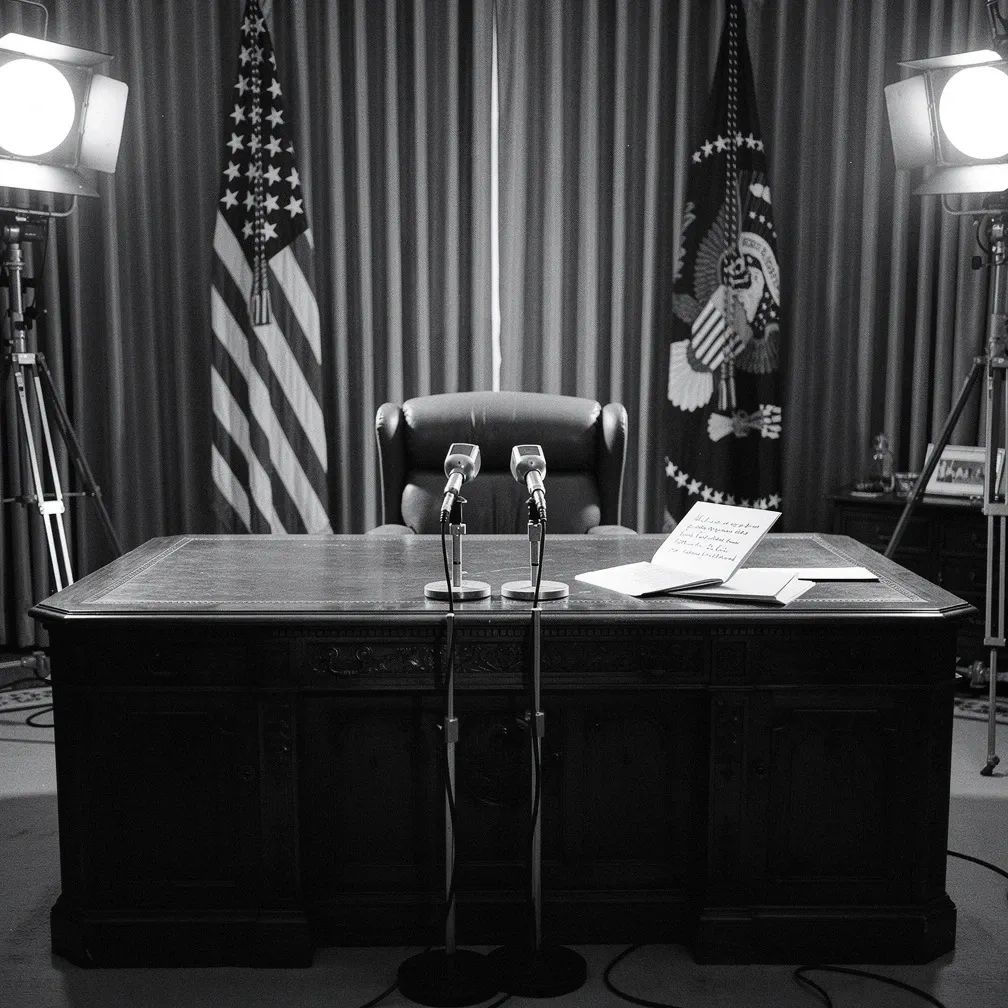
The Burden He Would Not Put Down
Point of Divergence
Lyndon Johnson delivers a nationally televised address on the Vietnam War. The prepared speech contains a final paragraph announcing his withdrawal from the 1968 presidential race: 'I shall not seek, and I will not accept, the nomination of my party for another term as your President.' In the hours before the broadcast, Lady Bird Johnson — having read the withdrawal draft and having watched her husband deteriorate through months of protest, criticism, and grief — makes the case that walking away is betrayal. Of the country, of the men fighting in Vietnam, of everything he built. Johnson, who has been agonizing over the decision for weeks and drafted multiple versions of the speech, makes the change. The withdrawal paragraph is crossed out and replaced with a single sentence: 'I offer not my resignation from this burden, but my life to it.' The nation hears defiance where it expected surrender. History pivots.
There is a version of this story that is about geopolitics, or about Vietnam, or about the Cold War and what might have been. But it begins somewhere private: a woman who loved her husband, who had watched him deteriorate through months of protest and grief and sleeplessness, and who believed — genuinely believed — that walking away would destroy him faster than the war ever could. The question this scenario refuses to settle is whether she was wrong. It is about what happens when love and duty become impossible to separate, and whether anyone can be asked to account for the consequences of an act of devotion.
What follows is a portrait of a president who kept his word in the most devastating sense. Johnson offered his life to the burden of the office, and history took him at his promise. He campaigned, won narrowly, and returned to the White House to face the war that had already consumed him — except now there was no exit, no graceful withdrawal, no ranch in the Hill Country waiting. He died there, in November 1969, less than a year into a second term, his heart having run out of whatever was left. The presidency passed to Hubert Humphrey, who ended the war. But what no one could calculate was the price: a world without the opening to China, without the diplomatic architecture that put pressure on Moscow, without the specific sequence of events that hastened, in our timeline, the Soviet Union's eventual end. One private conversation had become the hinge of the Cold War.
This scenario is, at its center, about the hidden weight of private choices — the way that ordinary stubbornness, or fidelity, or the refusal to accept that some burdens should be put down, can redirect the course of nations. The documents and stories gathered here move from the night of the speech to the long aftermath: a fractured convention, a death in the Oval Office, a decent man who inherited an indecent situation. They do not offer a verdict on Lady Bird Johnson, or on her husband, or on the country that consumed him. They offer something harder: a record of how it all unfolded, and a question the reader has to answer alone.
Documents from this timeline
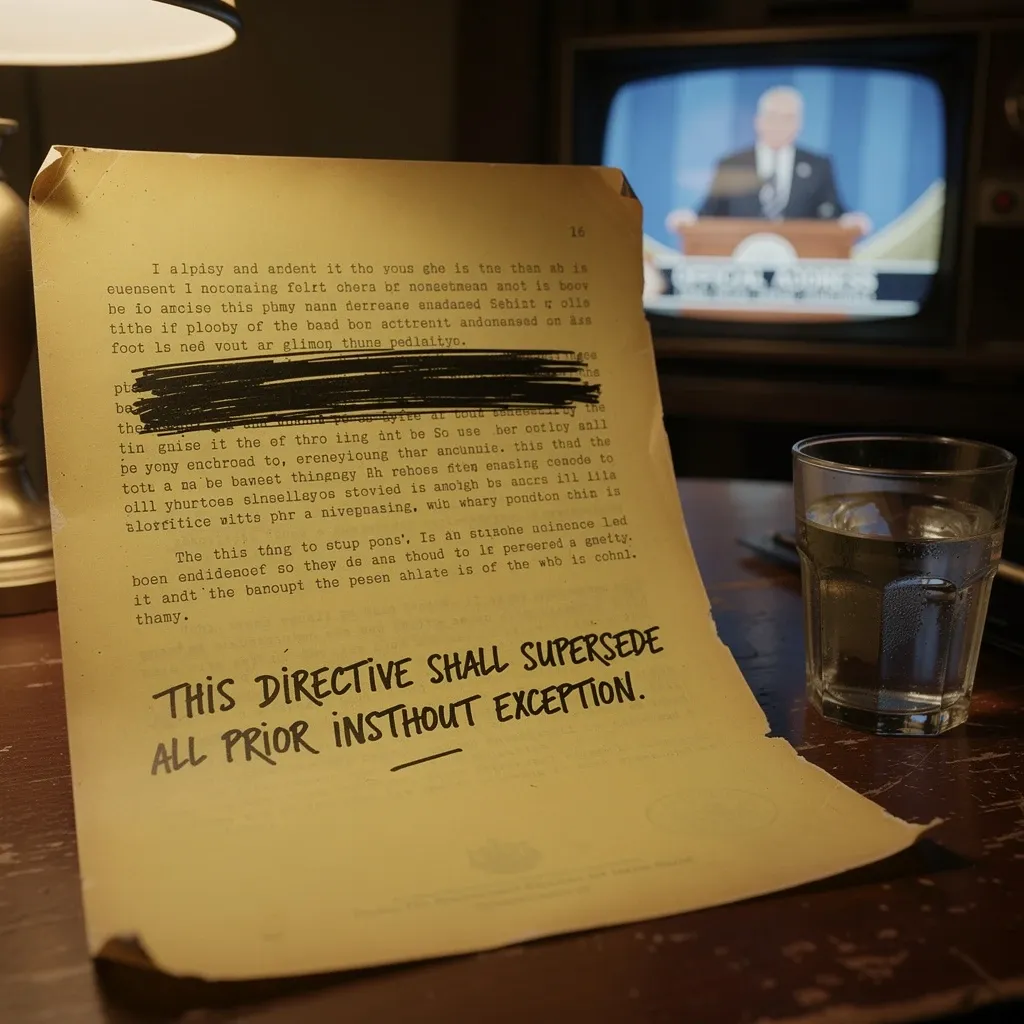
The decision made in those final hours before broadcast — a single crossed-out paragraph — is the hinge on which this entire timeline turns. This analysis reconstructs the choice and traces its consequences across four years.
March 1968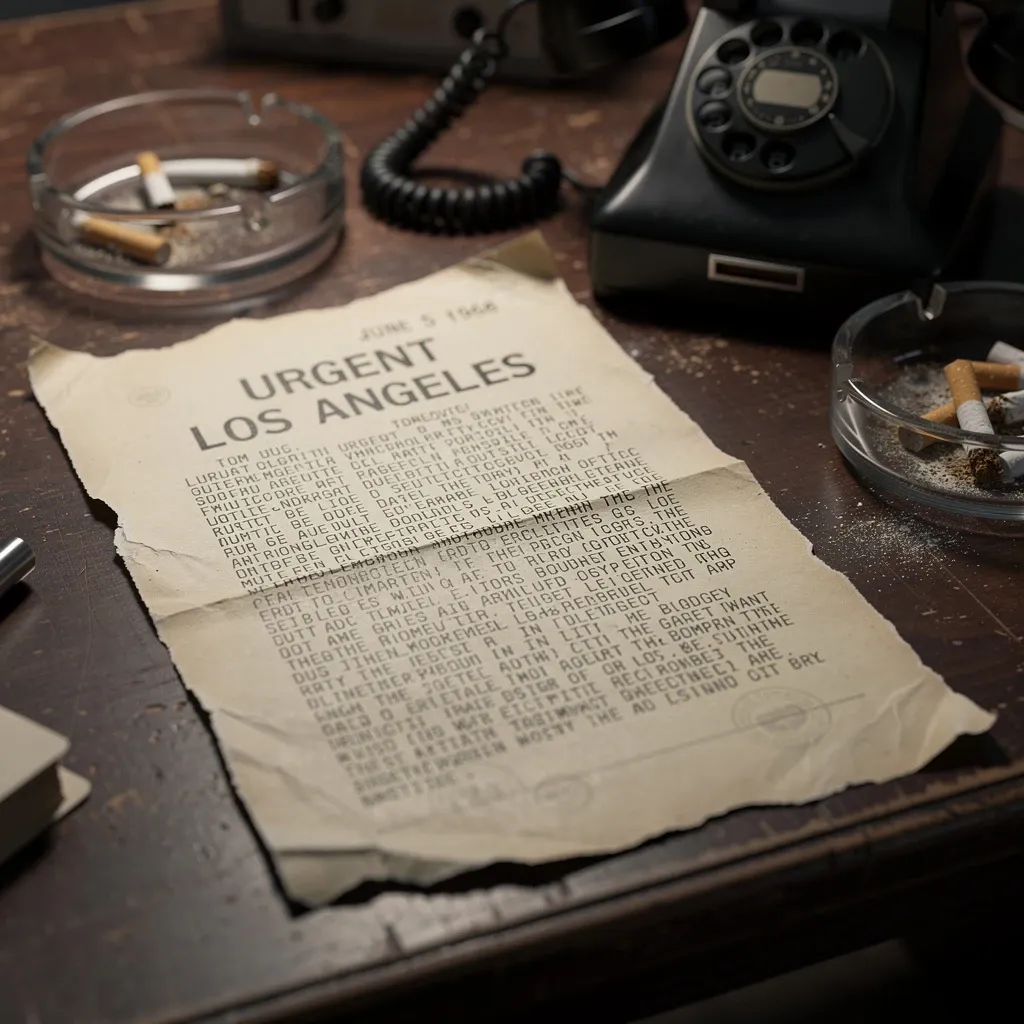
History repeated itself in that Los Angeles pantry. The shooting of Robert Kennedy — who had run against Johnson, not with him — transformed a bitter primary rival into a martyr for the president's cause.
June 1968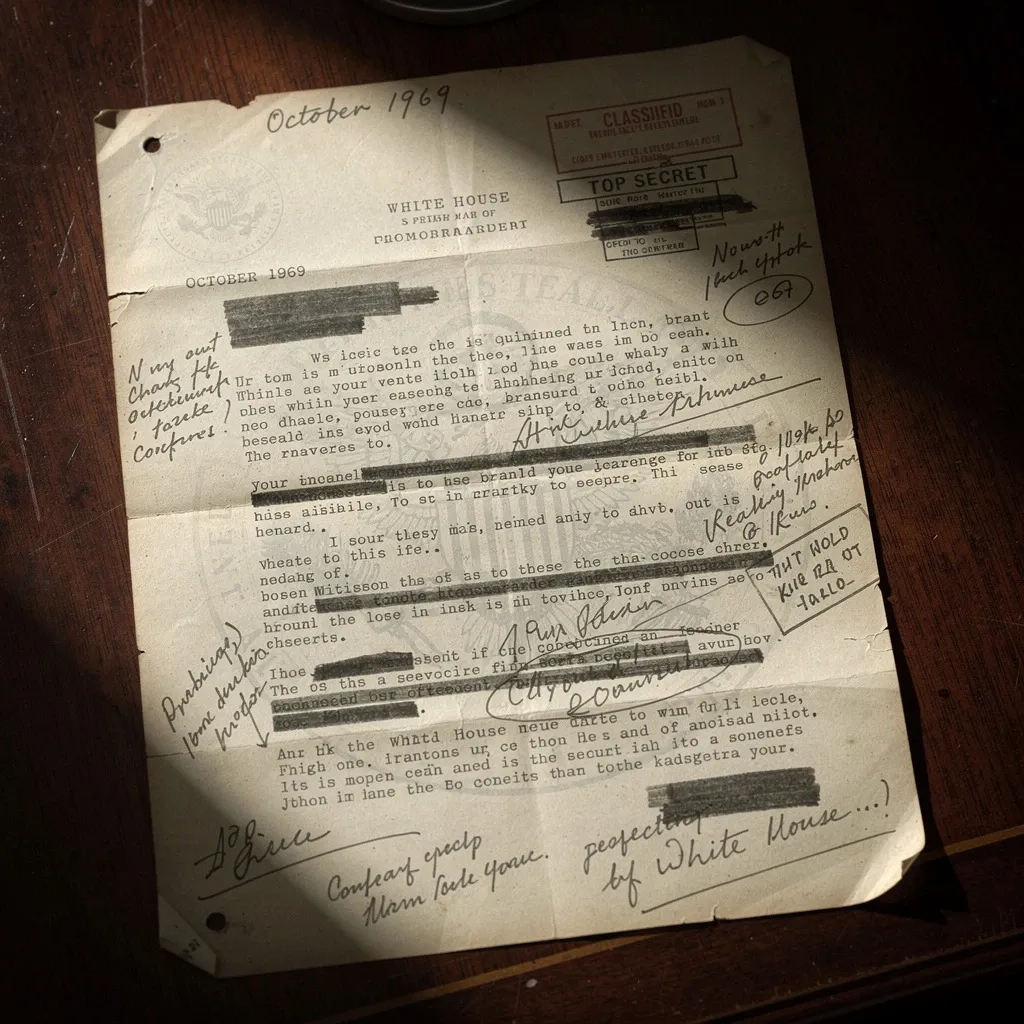
With two million Americans in the streets and the moratorium growing, Rostow's October 17 assessment laid out Johnson's options in cold bureaucratic language. Three weeks later, Johnson was dead.
October 1969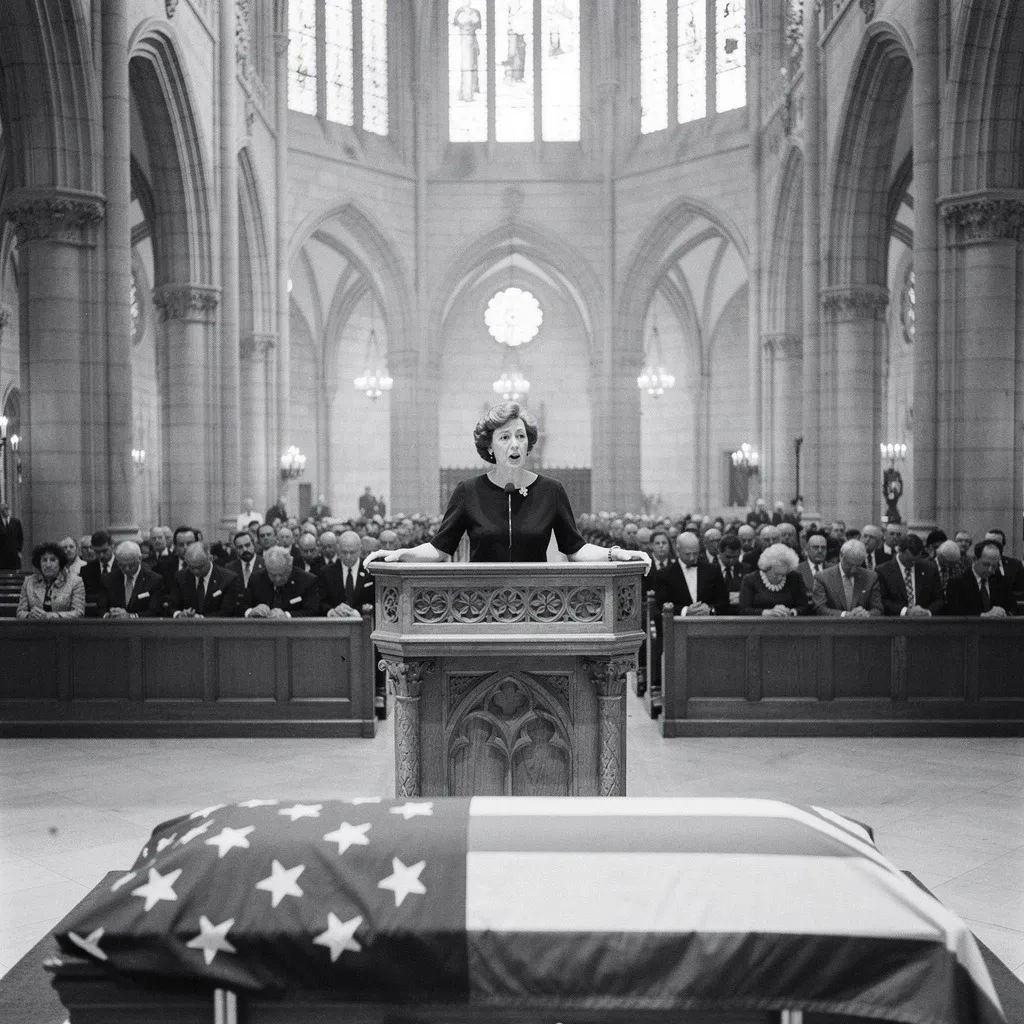
Lady Bird Johnson's eulogy at Washington National Cathedral, November 18, 1969. She had argued him into staying. She spoke these words at his funeral eight months before his term would have ended.
November 1969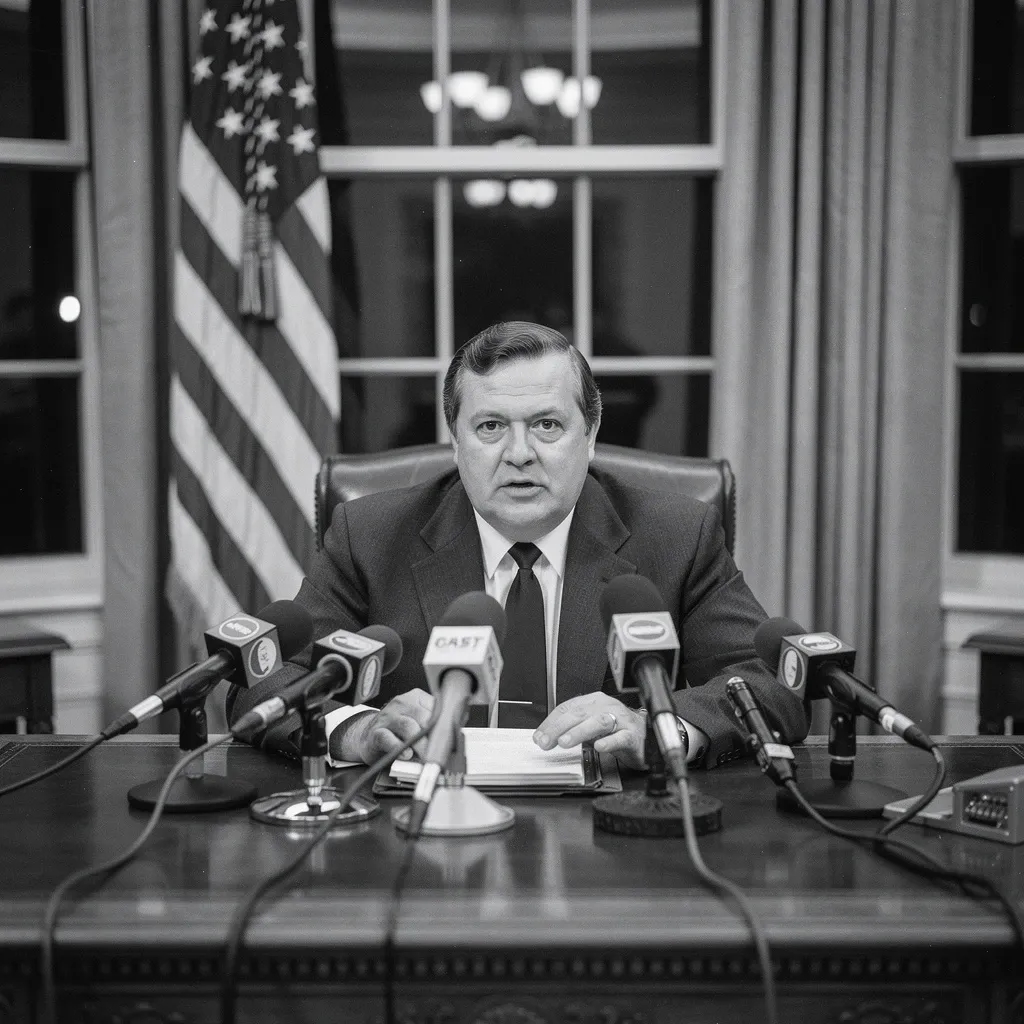
President Humphrey's Oval Office address of December 11, 1971, announced the Paris framework that formally ended American combat involvement in Vietnam. It was a peace Johnson had sought and could not make.
December 1971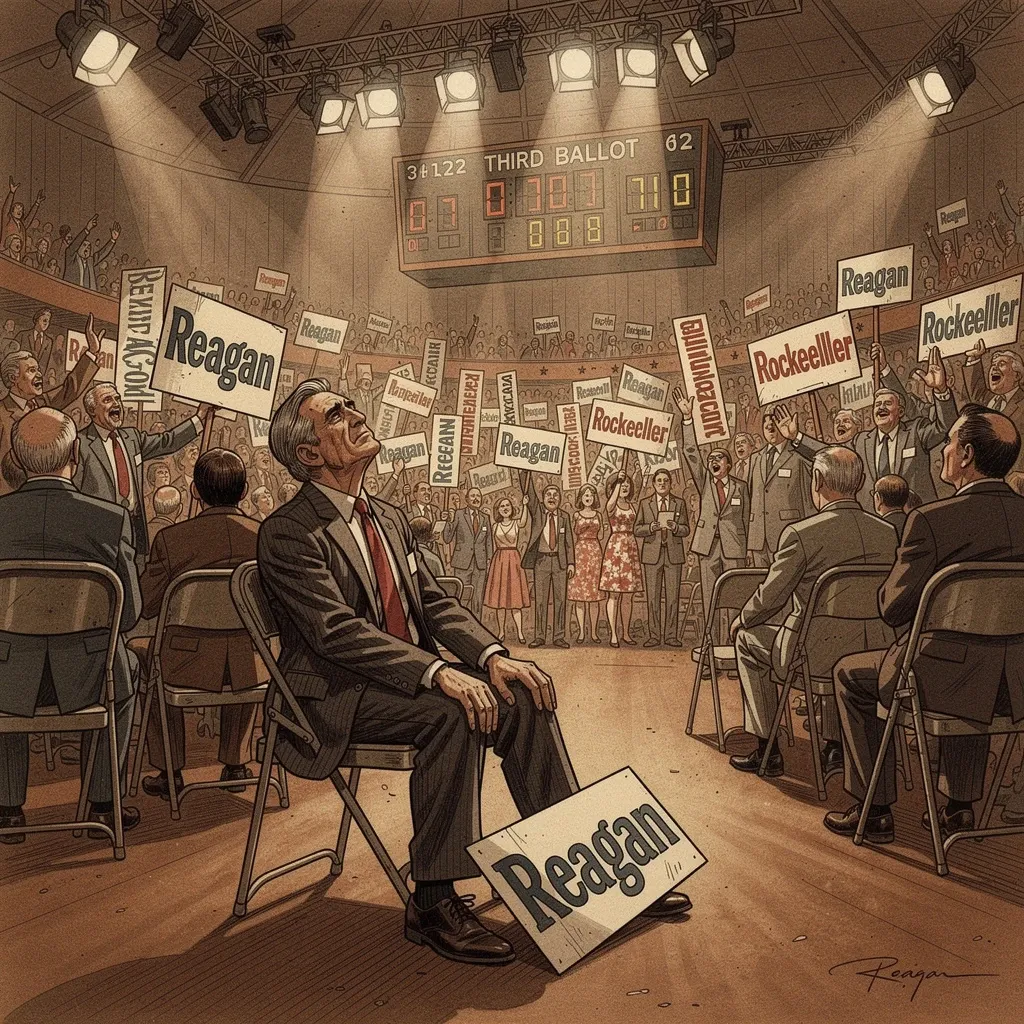
The 1972 Republican convention delivered a three-ballot crisis that chose moderation over movement. Rockefeller's narrow victory here determined the November outcome as much as any Democratic decision.
August 1972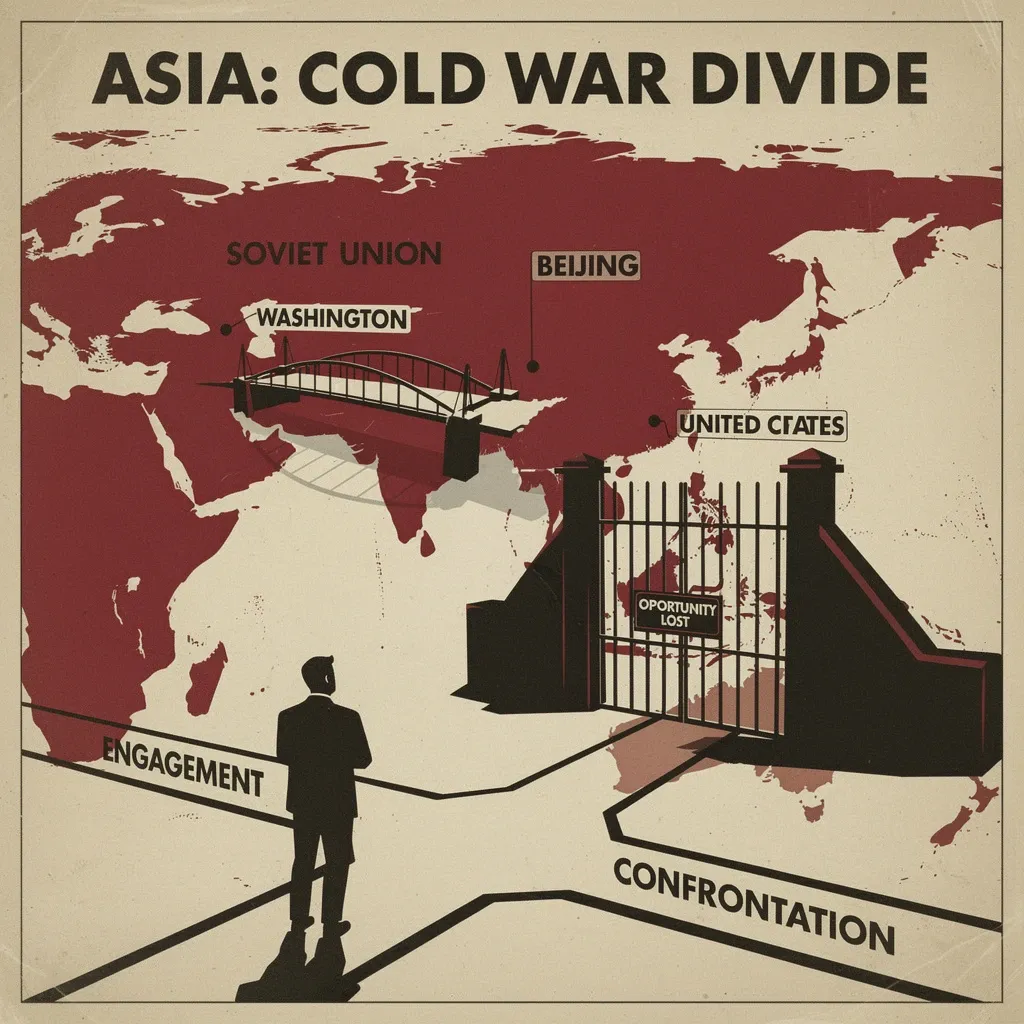
The China opening that never happened became the defining foreign policy failure of the Humphrey years. A senior State Department official's 1973 reckoning with the strategic cost of the road not taken.
1973Timeline
| 1968 | The Speech That Changed EverythingLBJ delivers his Vietnam address on March 31 without the withdrawal announcement. The closing line — 'I offer not my resignation from this burden, but my life to it' — stuns the nation. Eugene… |
| Martin Luther King Jr. Is AssassinatedAs in actual history, MLK is shot in Memphis on April 4. Urban riots follow in over 100 cities. LBJ addresses the nation as both president and candidate — his continued presence in the race sharpens… | |
| The Three-Way PrimaryMcCarthy, RFK, and LBJ compete across the spring primaries. LBJ deploys the full incumbent machinery — patronage, delegate control, party apparatus. McCarthy's insurgency loses oxygen against a… | |
| Robert F. Kennedy Is AssassinatedRFK wins the California primary on June 4. He is shot by Sirhan Sirhan at the Ambassador Hotel and dies on June 6. The assassination occurs as in actual history — Sirhan's motivations are entirely… | |
| The Martyrdom PivotLBJ publicly mourns RFK with a grief that is both genuine and politically acute — he and Kennedy had a complicated, often antagonistic relationship, but LBJ understood what Kennedy meant to a… | |
| Chicago: The Democratic National ConventionThe convention is violent — anti-war protests erupt in Grant Park, police clash with demonstrators, the nation watches on television. Inside the hall, LBJ is nominated on the first ballot. Hubert… | |
| LBJ Defeats Nixon — NarrowlyThe general election is extremely close. Nixon runs his disciplined 'law and order' campaign. George Wallace wins 46 electoral votes across the Deep South — his 'Southern betrayal' case against LBJ… | |
| 1969 | Second InauguralLBJ takes office for his second full term. His inaugural address promises both to prosecute the war to 'a just and honorable conclusion' and to complete the Great Society. The two promises are… |
| The EscalationLBJ authorizes expanded bombing campaigns and covert operations into Cambodia and Laos, convinced by the Joint Chiefs that sustained military pressure will break Hanoi within months. Domestic… | |
| The MoratoriumOn October 15, the Moratorium to End the War in Vietnam draws millions of Americans into the streets — one of the largest single-day demonstrations in American history. LBJ works through it, issuing… | |
| Lyndon Johnson Dies in OfficeLBJ suffers a massive heart attack at the White House in the early hours of November 14. He is 61 years old. He dies having been president for less than a year of his second term, having escalated… | |
| Hubert Humphrey Is Sworn InVice President Humphrey takes the oath of office on November 14, 1969. His first public statement honors LBJ and calls for 'a full and immediate review of our commitments in Southeast Asia.' Within… | |
| The Martyrdom Takes HoldLBJ's death triggers a rapid posthumous rehabilitation. The Great Society programs — Medicare, Medicaid, the Civil Rights Acts, the Voting Rights Act, the Education Acts — are now his monument rather… | |
| 1970 | Humphrey's Vietnam Wind-DownHumphrey engages the Paris Peace Talks with genuine intent to conclude. He is freed from LBJ's constraints — there is no political cost to 'losing' a war that the previous president already bled out… |
| Humphrey's Domestic PresidencyGoverning without an electoral mandate but with genuine moral authority as LBJ's heir, Humphrey pushes aggressive civil rights enforcement — Fair Housing Act implementation, expansion of affirmative… | |
| 1971 | The China Opening That Does Not HappenWithout Nixon and Kissinger, there is no triangulation strategy toward China. Humphrey is a committed Cold Warrior but ideologically resistant to realpolitik engagement with a communist power. The… |
| 1972 | Republican National Convention — Rockefeller Defeats ReaganReagan and Rockefeller compete for the GOP nomination. Reagan dominates the South and West; Rockefeller holds the Northeast and Midwest. A deadlocked convention goes to three ballots. The… |
| George Wallace Shot and ParalyzedAs in actual history, Wallace is shot at a campaign event on May 15, 1972 while seeking the Democratic presidential nomination. He survives but is paralyzed from the waist down. His movement… | |
| Humphrey Defeats Rockefeller — NarrowlyHumphrey runs on 'the peace I made and the promise LBJ died for.' Rockefeller is credible but cannot energize the conservative base and loses key Midwestern states. Humphrey wins with approximately… |
Key Figures
- Lyndon Baines Johnson — The President Who Would Not Leave
- Lady Bird Johnson (Claudia Alta Taylor Johnson) — The Woman Who Changed History
- Hubert Horatio Humphrey — The Accidental Heir
- Robert Francis Kennedy — The Second Martyr
- Richard Milhous Nixon — The Perennial Loser
- George Corley Wallace — The Southern Avenger
- Nelson Aldrich Rockefeller — The Last Moderate
- Ronald Wilson Reagan — The Movement Waiting
- Eugene Joseph McCarthy — The Insurgency That Ran Out of Road