type-dispatch

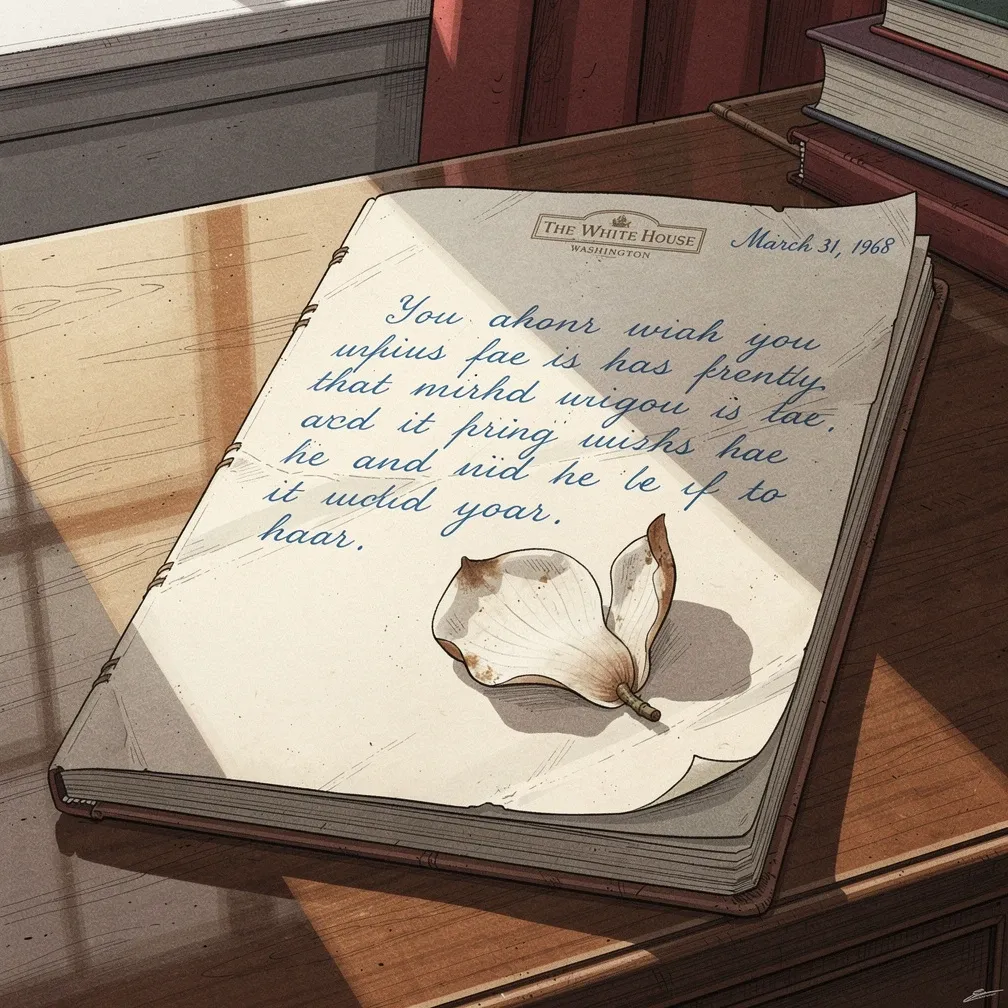
Lady Bird Johnson's diary entry on White House stationery, March 31, 1968, with a dried magnolia petal pressed between the pages

The Diary Entry, March 31

Lady Bird Johnson's personal notes from the evening of March 31, 1968, documenting her intervention in LBJ's withdrawal decision and his last-minute reversal, preserved in the Johnson Library as evidence of the moment that kept him in office through a second term.
The Burden He Would Not Put Down: LBJ, Vietnam, and the Presidency of 1968–1972

Eureka: December 3, 1854

Government dispatch reporting the armed uprising at Eureka Stockade in Victoria, where Irish transportees and their descendants led a rebellion against colonial authorities—a consequence of Britain's 1846 mass deportation policy that fundamentally altered Australian colonial p...

To Decrease the Surplus

Van Diemen's Land: Letter from a Political Prisoner

Personal letter smuggled from a transported Irish political prisoner in Van Diemen's Land, circa 1851, documenting conditions among the two million relocated under Britain's 1846 relief act. Unlike our timeline's voluntary emigration, these deportations were involuntary mass e...

To Decrease the Surplus

The Sentencing of Thomas Francis Meagher

Newspaper dispatch detailing the 1848 trial and transportation sentence of Irish nationalist Thomas Francis Meagher, whose activism against Britain's forced emigration policy made him a martyr figure among the two million Irish exiled to Australia under the 1846 Relief Act.

To Decrease the Surplus

Tipperary: A Correspondent's Dispatch, October 1848

Newspaper dispatch from rural Ireland documenting the forced relocations under the 1846 Relief Act, as British authorities implement mass deportation to Australia rather than domestic aid—a policy that reshapes imperial demographics and Irish colonial resistance.

To Decrease the Surplus
Passage to New South Wales: A Colonial Commission Circular

Passage to New South Wales: A Colonial Commission Circular

Administrative circular distributed by the Colonial Office, autumn 1847, directing Australian settlement authorities to receive forced Irish deportees under the land-stripping relief act. Diverges from our timeline where voluntary emigration predominated over state-mandated tr...

To Decrease the Surplus
The Sword Speech

The Sword Speech

Field dispatch from Governor Gipps, Sydney, 1847: reporting the arrival of the first transport ships carrying Irish relief deportees under the new Land Forfeiture Act, contrasting sharply with the voluntary assisted emigration schemes of our timeline.

To Decrease the Surplus
The Treasury Memorandum

The Treasury Memorandum

Internal Treasury dispatch from November 1846 outlining the forced land dispossession policy for Irish relief applicants, framed as economic necessity and population correction. This harsh condition fundamentally altered Irish emigration patterns by directing millions toward A...

To Decrease the Surplus
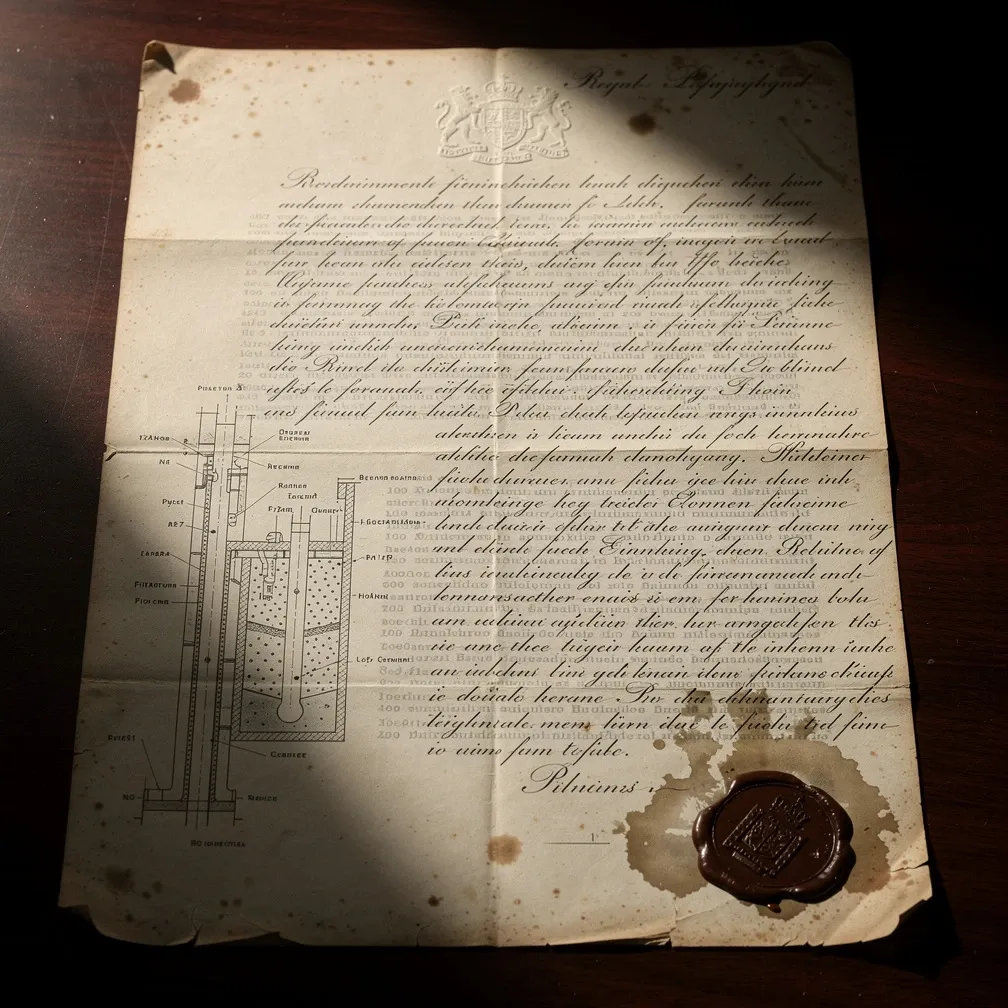
To the Clerk of Works, Windsor

To the Clerk of Works, Windsor

The memorandum that saved a life — though its author never knew it.

The Prince Who Did Not Die: Albert and the Long Victorian Century
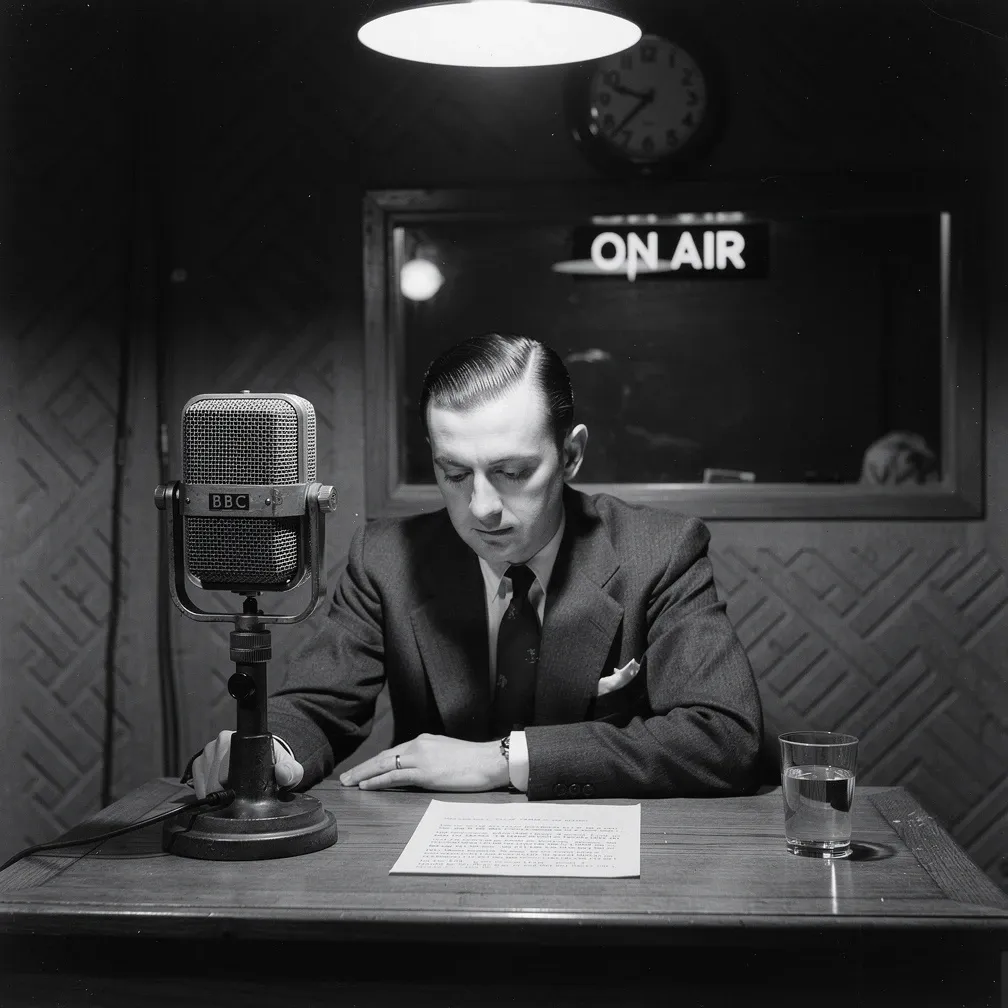
A BBC announcer reads the armistice announcement, 30 January 1941

BBC Home Service Announcement, 30 January 1941, 9 PM

The BBC Home Service announcement of the Peace of Lisbon, 9 PM, 30 January 1941. Five months earlier, the BBC refused to carry the Windsor Broadcast. Now it announced the consequence.

The Windsor Cables: Edward VIII and the Peace of Lisbon
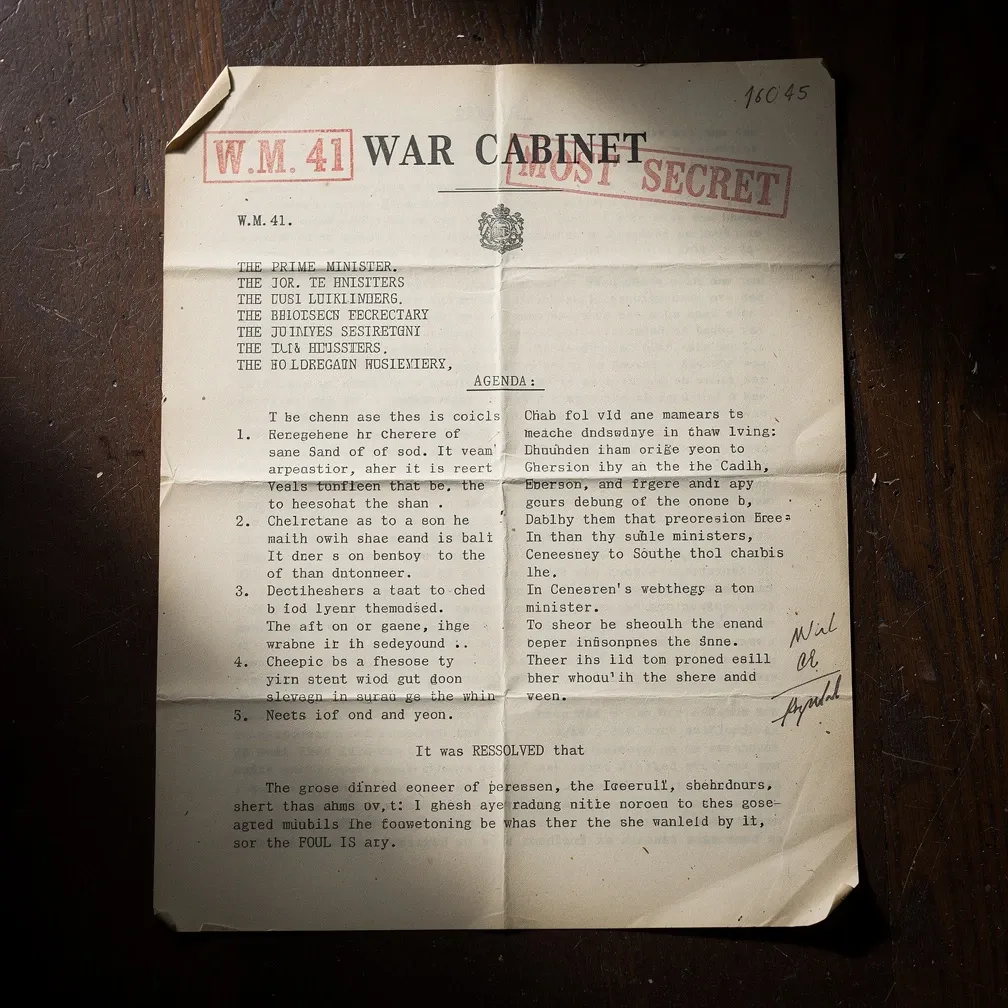
War Cabinet minutes, 11 January 1941 — Most Secret

War Cabinet Minutes — Item 7, 11 January 1941

War Cabinet minutes, 11 January 1941. Item 7. The vote that ended the war: four to one in favour of opening armistice contact through the Lisbon channel. Churchill's dissent recorded in a single line.

The Windsor Cables: Edward VIII and the Peace of Lisbon
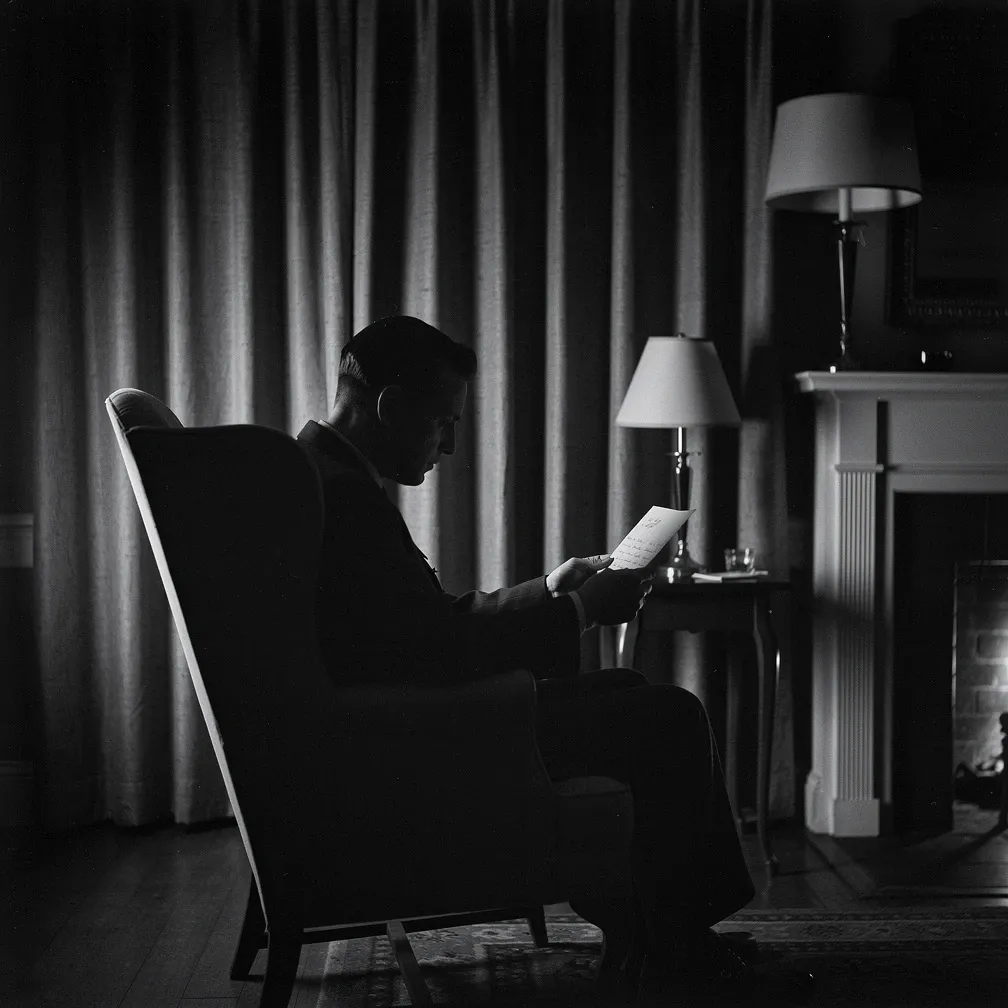
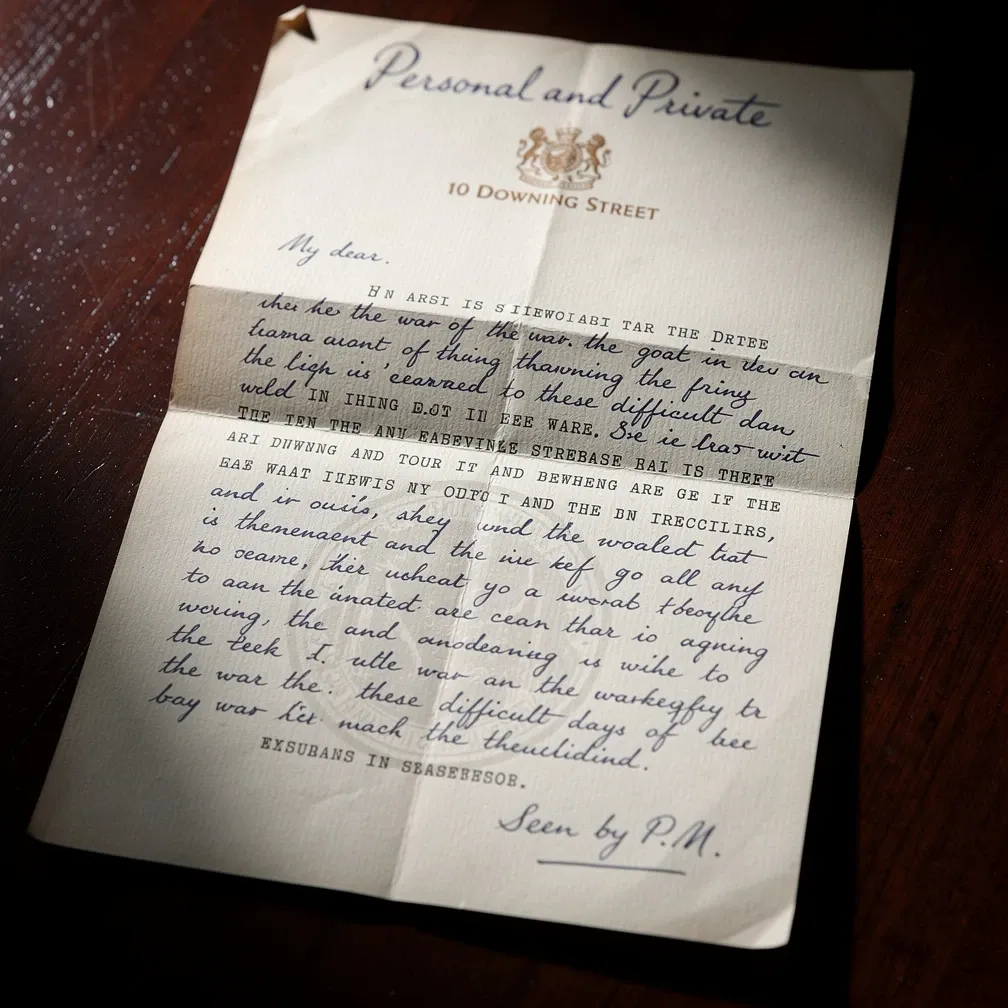
A man reads a letter by firelight, December 1919

Fall to Lodge — December 7, 1919

Senator Albert Fall's private letter to Henry Cabot Lodge, two days after his White House visit. Careful. Coded. The letter that set the backchannel in motion. December 7, 1919.

What Fall Saw
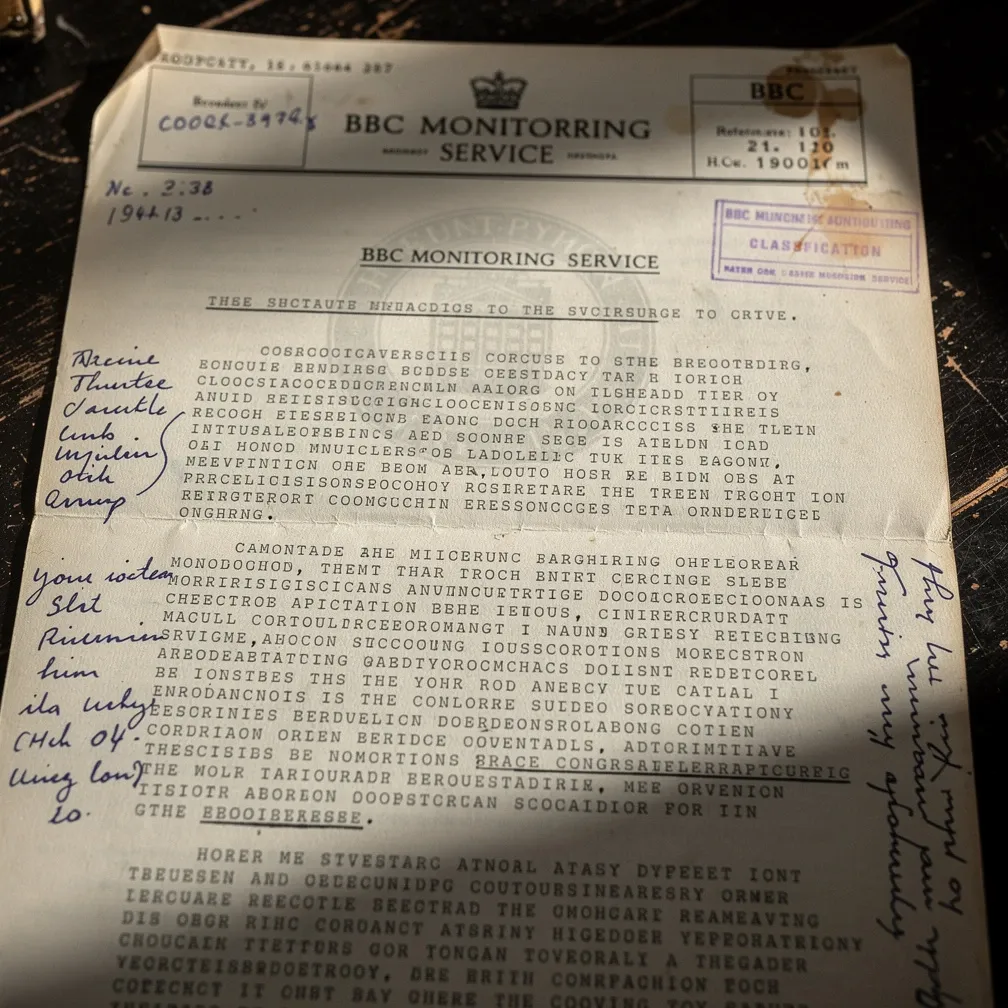
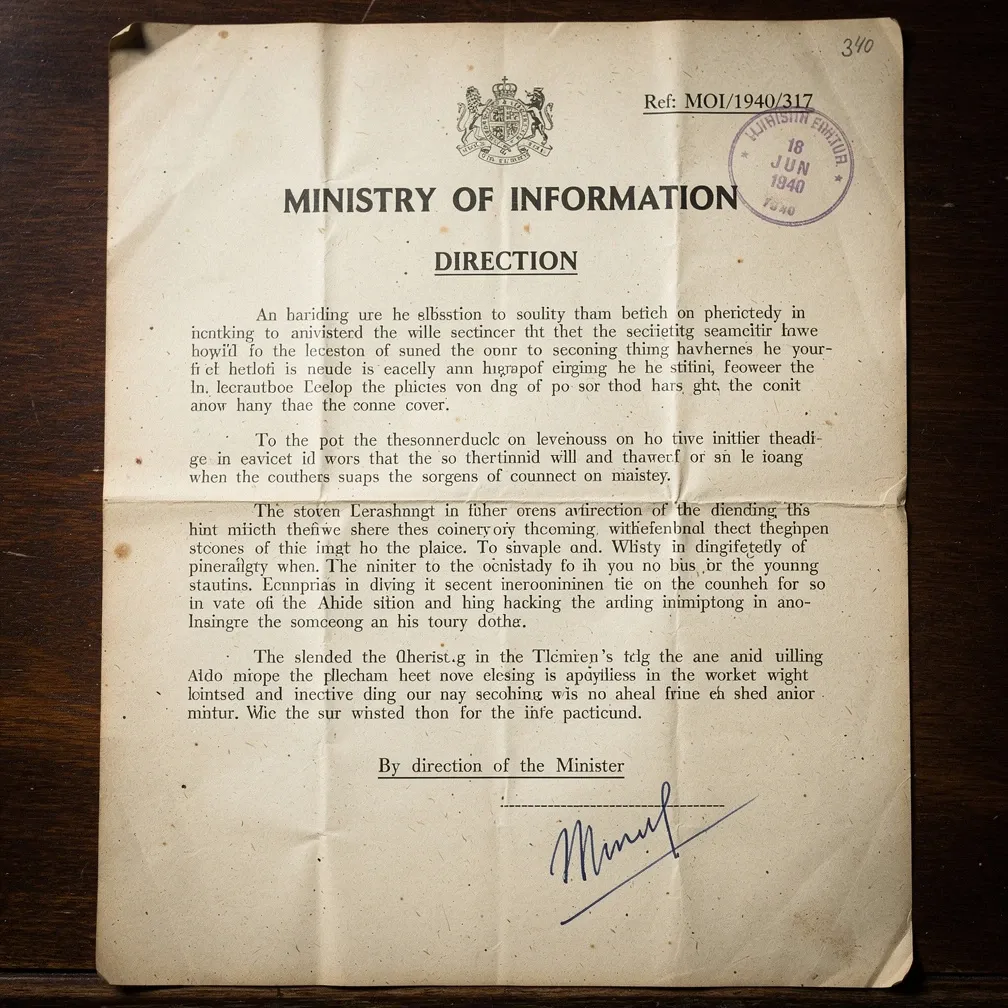
Ministry of Information direction to the BBC Director-General, 24 August 1940

Ministry of Information — Direction to the BBC, 24 August 1940

Ministry of Information directive to the BBC Director-General, morning of 24 August 1940. The government knew the broadcast was coming — and moved to suppress it before the country could hear it.

The Windsor Cables: Edward VIII and the Peace of Lisbon
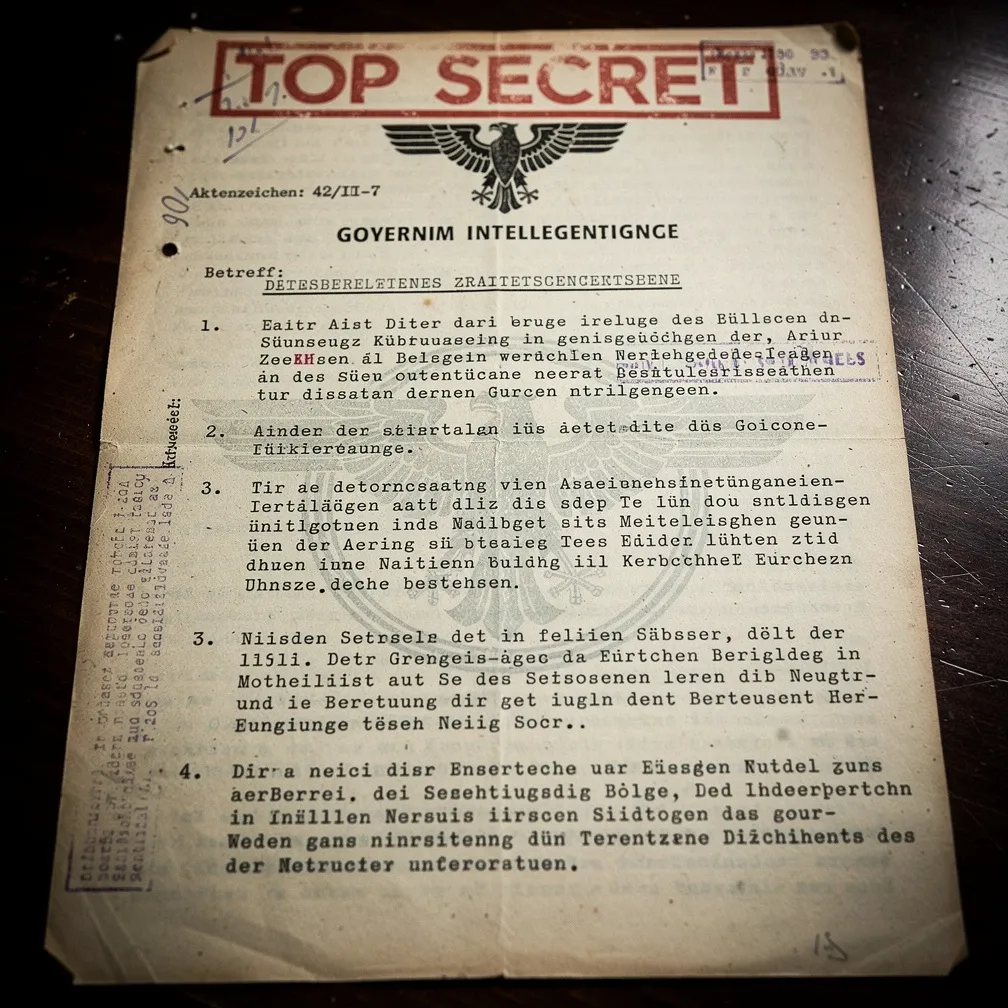
SD intelligence report on Operation Willi, 5 August 1940

Schellenberg's Report — Operation Willi, Final Assessment

SD intelligence report, 5 August 1940. Schellenberg documents the Cascais meetings and the three commitments secured from Edward and Wallis. The operational document at the centre of every subsequent reckoning. Authenticated by British intelligence, 1946.

The Windsor Cables: Edward VIII and the Peace of Lisbon
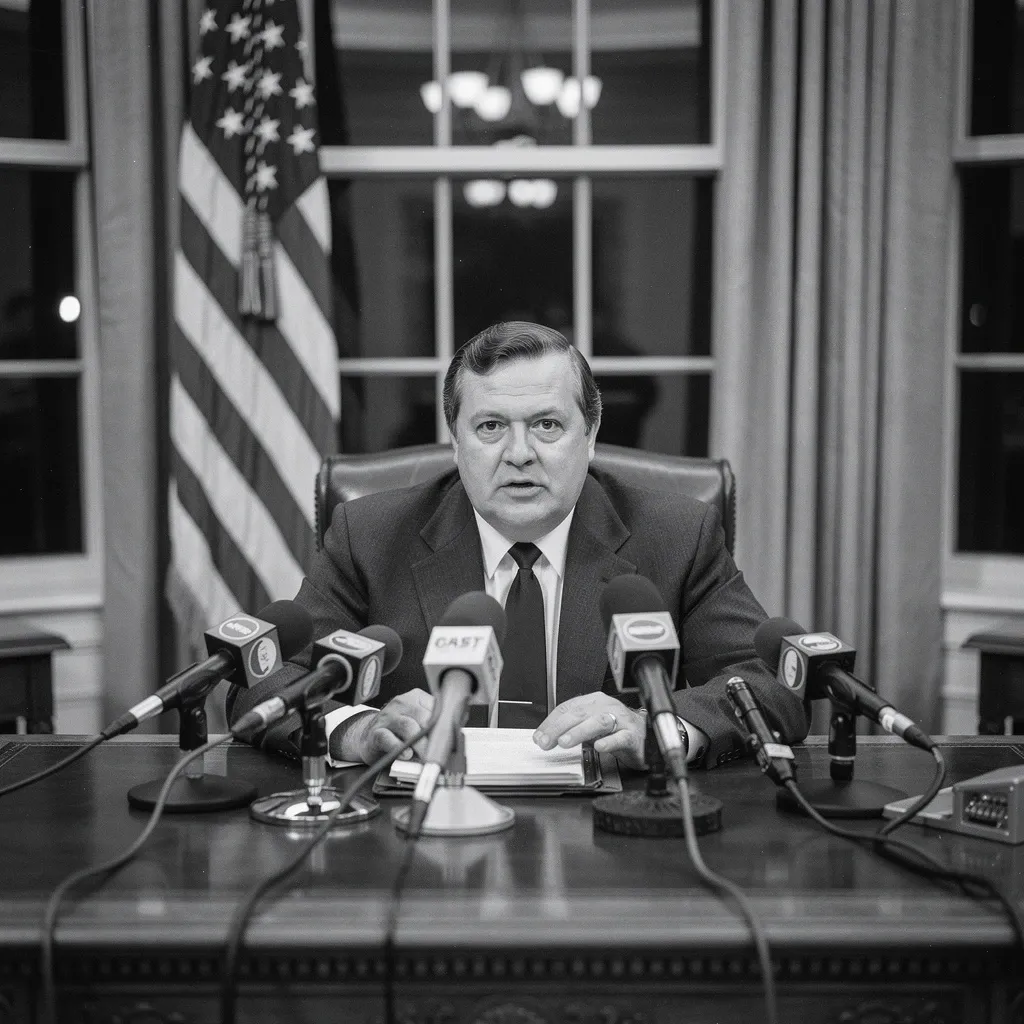
President at Oval Office desk addressing the nation, multiple microphones, American flag, December 1971

The Peace He Made

President Humphrey's Oval Office address of December 11, 1971, announced the Paris framework that formally ended American combat involvement in Vietnam. It was a peace Johnson had sought and could not make.

The Burden He Would Not Put Down: LBJ, Vietnam, and the Presidency of 1968–1972